How to Get an Accurate Wire Harness Quote
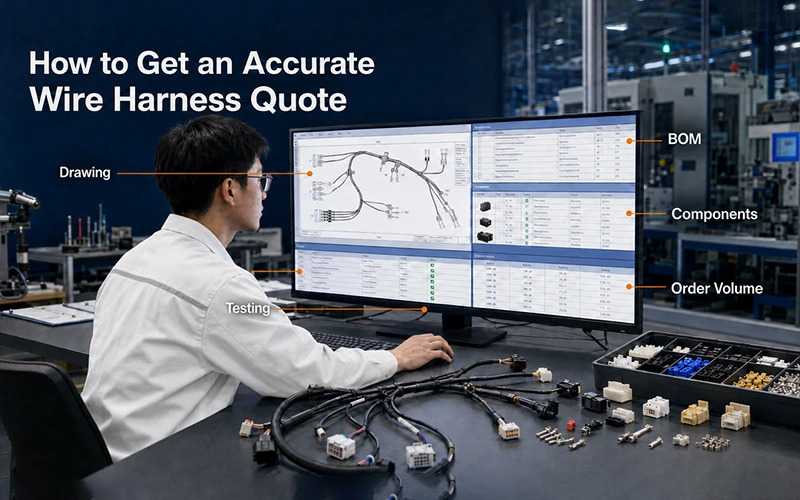
An accurate custom wire harness quotation cannot be calculated from cable length alone.
A complete assembly may include wires, multicore cables, terminals, seals, connector housings, sleeves, tapes, labels, molded parts, shielding structures, fixtures, testing requirements, and manual assembly operations. Two harnesses with the same overall length may therefore have significantly different material costs, processing times, quality risks, and tooling requirements.
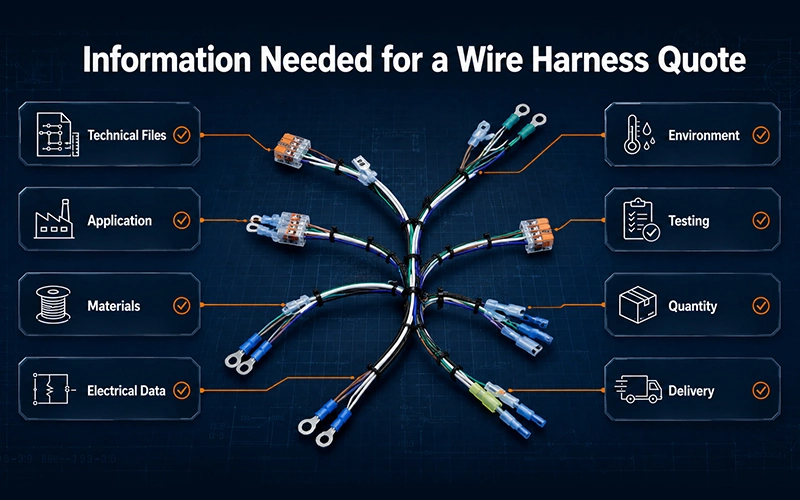
To prepare a reliable quotation, the manufacturer must understand:
- What the assembly connects
- Where it will be installed
- Which materials and components are required
- How the wires must be processed and assembled
- Which tests and quality records are necessary
- How many units will be produced
- Whether tooling or development work is required
- When and where the products must be delivered
Modern harness-manufacturing software reflects this data-driven approach. Zuken’s Harness Builder 2026 can generate BOM information, material and labor estimates, manufacturing documents, and production outputs from structured design data. The software also connects quotations with current component pricing and availability information and supports downstream manufacturing and testing workflows.
For buyers, supplying complete information at the RFQ stage helps achieve three important results:
- A faster quotation
- A more accurate total project cost
- Fewer technical changes after sample production begins
Why Cable Length Alone Is Not Enough
Cable length is only one cost factor in a custom assembly.
The total quotation may include:
| Cost Category | Typical Elements |
| Wire and cable | Conductor size, cable type, shielding, insulation, jacket, color, and length |
| Connectors | Housings, contacts, seals, plugs, backshells, locks, and accessories |
| Processing | Cutting, stripping, crimping, soldering, welding, twisting, and tinning |
| Assembly | Connector insertion, routing, taping, sleeving, labeling, and branch formation |
| Protection | Heat shrink, conduit, braided sleeve, grommets, strain relief, and molding |
| Testing | Continuity, miswiring, insulation, withstand voltage, resistance, and functional testing |
| Tooling | Applicators, dies, fixtures, harness boards, test adapters, and molds |
| Quality records | First-article reports, inspection documents, test reports, and traceability |
| Packaging | Individual bags, reels, trays, labels, protective caps, and export cartons |
| Logistics | Delivery schedule, destination, Incoterms, and shipment method |
A simple two-wire jumper with standard terminals may require very little engineering work. A shielded industrial cable with several branches, specialized connectors, overmolding, customer-specific testing, and documented traceability requires a substantially different manufacturing process.
The quotation must therefore be based on the complete product definition.
Information Checklist for a Wire Harness RFQ
The following information gives a manufacturer the best basis for technical evaluation and costing.
| Information Category | Recommended Details |
| Technical files | 2D drawing, 3D model, wiring diagram, BOM, wire list, datasheets, or physical sample |
| Application | Equipment type, installation position, function, and operating conditions |
| Electrical requirements | Rated voltage, continuous current, peak current, signal type, and resistance limits |
| Wire and cable | Gauge, conductor material, insulation, jacket, color, shielding, and applicable standard |
| Connectors and terminals | Manufacturer, part number, mating interface, seals, accessories, and approved alternatives |
| Mechanical requirements | Overall length, branch dimensions, bend radius, routing space, and fixing points |
| Environment | Temperature, vibration, flexing, humidity, dust, oil, chemicals, and ingress protection |
| Testing | Continuity, miswiring, insulation, withstand voltage, pull force, and functional tests |
| Compliance | IPC/WHMA-A-620, UL, RoHS, REACH, customer specifications, or industry requirements |
| Quantity | Prototype quantity, first order, monthly demand, and annual usage |
| Delivery | Required sample date, mass-production date, destination, and Incoterms |
| Documentation | First-article report, material certificates, test reports, PPAP, or traceability records |
Not every project requires every item. However, missing information should be clarified before the quotation is treated as final.
1. Provide 2D or 3D Drawings, a Wire List, or a Sample
Technical files are the foundation of an accurate quotation.
The most useful inputs include:
- PDF or CAD drawing
- STEP or other 3D file
- Electrical schematic
- From-to wire list
- Connector cavity table
- BOM
- Existing product datasheets
- Physical sample
- Installation photographs
- Equipment layout
A good drawing should identify the physical construction of the product, while the wire list should define the electrical connections.
What the Drawing Should Show
Where applicable, include:
- Overall length
- Branch lengths
- Breakout positions
- Connector orientation
- Cable exit direction
- Terminal or lug orientation
- Sleeve and tape positions
- Label positions
- Tolerances
- Protective materials
- Critical installation dimensions
What the Wire List Should Show
A structured wire list may include:
- Circuit number
- From and to locations
- Connector cavity numbers
- Wire gauge
- Wire color
- Wire specification
- Cut length
- Terminal part numbers
- Seal requirements
- Twisting or shielding instructions
- Processing notes
Zuken’s wire harness tools use design data to maintain synchronized BOM and wire-run information, including wire lengths, end treatments, seals, connector details, and other manufacturing attributes. This illustrates why structured drawings and connection data improve both quotation accuracy and production preparation.
When Only a Sample Is Available
A physical sample can help the manufacturer identify:
- Connector families
- Wire specifications
- Overall structure
- Branch locations
- Protective materials
- Assembly methods
However, a sample does not always reveal:
- Rated voltage and current
- Original material specifications
- Approved suppliers
- Internal crimp requirements
- Electrical test limits
- Environmental requirements
- Customer acceptance criteria
For reverse-engineered projects, the sample should therefore be supported by application and performance information.
2. Explain the Application and Installation Position
The same cable construction may perform differently in different applications.
The manufacturer should understand:
- What equipment uses the harness
- Which components it connects
- Whether it is installed inside or outside the equipment
- Whether it remains static or moves repeatedly
- Whether operators or service technicians will handle it
- Whether the cable is exposed to vibration, heat, moisture, or chemicals
- Whether it must pass through restricted routing spaces
Application information helps the engineering team evaluate whether the proposed materials and construction are appropriate.
Industrial Equipment
An industrial harness may require:
- Oil-resistant cable
- Vibration-resistant connectors
- Shielding
- Flexible routing
- Mechanical protection
- Clear service labels
Robotics and Motion Equipment
A dynamic harness may require:
- High-flex cable
- Controlled bend radius
- Torsion resistance
- Abrasion protection
- Suitable strain relief
- Defined routing in drag chains or robot arms
Energy Storage Systems
A BESS cable may require:
- High-current conductors
- High-voltage insulation
- Touch-proof interfaces
- Polarity control
- Temperature-rise verification
- Cabinet-specific routing
Medical Equipment
Medical cable assemblies may require:
- Signal integrity
- Small and reliable contacts
- Cleaning-resistant materials
- Detailed traceability
- Project-specific quality documentation
Without application details, the supplier may quote a product that matches the drawing but does not fully match the operating environment.
3. Identify the Connectors, Terminals, and Accessories
Connectors and terminals can represent a significant portion of the material cost and sourcing risk.
Provide the manufacturer and part number whenever possible.
Relevant components may include:
- Connector housing
- Receptacle or plug
- Male or female contact
- Terminal
- Cable seal
- Cavity plug
- Secondary lock
- Backshell
- Strain relief
- Clip
- Grommet
- Mounting hardware
- Protective cap
- Mating connector
Why Exact Part Numbers Matter
Similar-looking connector families may use different:
- Contact systems
- Wire-size ranges
- Seals
- Keying positions
- Locking structures
- Current ratings
- Mating interfaces
- Assembly tools
An incomplete connector description can lead to incorrect costing or delayed sourcing.
Approved Alternatives
The RFQ should clarify whether:
- Only the nominated brand is acceptable
- Equivalent components may be proposed
- The customer will supply any materials
- The supplier should source all components
- Alternative lead-time options are acceptable
Harness Builder 2026 links design BOM information with current component cost and availability inputs, demonstrating the increasing importance of accurate component identification in quotation workflows.
4. Specify the Wire and Cable Requirements
Wire and cable costs depend on much more than conductor length.
The quotation should define:
- Wire gauge or cross-sectional area
- Conductor material
- Stranding construction
- Insulation material
- Jacket material
- Color
- Number of cores
- Shielding
- Twisted-pair requirements
- Temperature rating
- Voltage rating
- Flexibility
- Flame performance
- Applicable cable standard
Single-Core Wire
For individual circuits, indicate:
- AWG or mm²
- Color
- Insulation
- Temperature rating
- Voltage rating
- Applicable standard
Multicore Cable
For multicore products, indicate:
- Number of cores
- Individual core sizes
- Overall diameter
- Shielding structure
- Drain wire
- Jacket material
- Flex rating
- Color coding
Shielded Cable
Shielding requirements may influence:
- Cable selection
- Drain-wire construction
- Connector type
- Shield termination
- Grounding method
- Assembly time
- Testing
The supplier should know whether the shield must be terminated at one end, both ends, or according to a customer-specific arrangement.
5. Provide Voltage, Current, and Signal Requirements
Electrical requirements influence conductor sizing, terminal selection, insulation, shielding, routing, and test methods.
Provide:
- Rated voltage
- Maximum operating voltage
- Continuous current
- Peak or inrush current
- Signal type
- Frequency or data requirements
- Acceptable voltage drop
- Resistance limits
- Grounding requirements
- Shielding requirements
- Circuit separation requirements
Power Circuits
High-current assemblies may require evaluation of:
- Conductor size
- Terminal resistance
- Connector rating
- Cable length
- Temperature rise
- Duty cycle
- Bundling
- Ventilation
- Contact interfaces
Signal Circuits
Signal and communication cables may require:
- Twisted pairs
- Controlled shielding
- Grounding
- Separation from power conductors
- Defined connector pinout
- Low-capacitance or impedance requirements
An accurate quote must account for the materials and processing needed to achieve the required electrical performance.
6. Describe the Environmental and Mechanical Conditions
Environmental requirements can change the cable, connector, protection, and testing scope.
Important conditions include:
- Minimum and maximum temperature
- Humidity
- Condensation
- Indoor or outdoor installation
- Water or dust exposure
- Required IP rating
- Oil
- Coolant
- Cleaning chemicals
- Salt spray
- UV exposure
- Vibration
- Shock
- Repeated bending
- Torsion
- Abrasion
- Installation force
Dynamic Versus Static Installation
A static internal cable and a continuously moving robot harness should not be quoted from the same assumptions.
Dynamic applications may require:
- High-flex conductors
- Special jackets
- Controlled lay length
- Bend-cycle testing
- Torsion testing
- Improved strain relief
- Additional routing review
Mechanical Protection
The design may require:
- Corrugated conduit
- Braided sleeve
- Heat-shrink tubing
- Spiral wrap
- Edge protection
- Cable clamps
- Grommets
- Tape wrapping
- Low-pressure molding
- Connector overmolding
These materials and operations must be included in the BOM and labor estimate.
7. Define the Testing and Acceptance Requirements
Testing can significantly affect project cost, fixture requirements, and production time.
The RFQ should identify which tests apply.
Common Electrical Tests
- Continuity
- Open-circuit detection
- Short-circuit detection
- Miswiring verification
- Insulation resistance
- Withstand voltage
- Contact resistance
- Low-resistance measurement
- Functional testing
Common Mechanical and Process Tests
- Pull-force testing
- Crimp-height measurement
- Crimp cross-section
- Connector retention
- Insertion and withdrawal force
- Cable bending
- Vibration
- Dimensional inspection
Environmental Validation
Depending on the project, validation may include:
- Temperature rise
- Thermal cycling
- Thermal shock
- Humidity
- Salt spray
- Flammability
- Ingress protection
- Chemical resistance
Acceptance Standard
Clarify whether the assembly must comply with:
- Customer drawings
- Customer workmanship standards
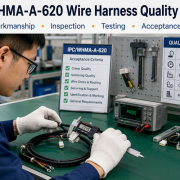
- IPC/WHMA-A-620
- UL requirements
- RoHS or REACH
- Automotive requirements
- Medical quality requirements
- Industry-specific test procedures
Testing requirements should be agreed before quotation because they may require dedicated test fixtures, adapters, software, samples, or external validation.
Zuken’s manufacturing environment supports transferring design details into compatible testing and wire-processing systems, reducing repeated data entry between design, manufacturing, and verification.
8. State the Prototype Quantity and Annual Demand
Quantity affects the production method and unit price.
Provide:
- RFQ quantity
- Prototype quantity
- Validation quantity
- First production order
- Monthly demand
- Annual demand
- Expected project life
- Peak demand
- Repeat-order frequency
Prototype Cost
Prototype pricing may include:
- Engineering review
- Material sourcing
- Small-lot purchasing
- Manual setup
- Tooling preparation
- Sample production
- First-article inspection
- Testing
- Documentation
The unit price for ten prototypes should therefore not be assumed to equal the unit price for annual production.
Mass-Production Cost
Higher volumes may support:
- Material price negotiation
- Automated processing
- Dedicated fixtures
- Optimized changeovers
- Batch production
- Amortized tooling
- More efficient packaging
Why Annual Usage Matters
Annual demand helps the manufacturer determine whether to use:
- Manual production
- Semi-automated processing
- Fully automated equipment
- Dedicated tooling
- Reusable test fixtures
- Custom molds
- Batch or continuous purchasing
Accurate volume information allows the supplier to recommend the most economical manufacturing route.
9. Clarify Tooling and Development Requirements
Some projects require only standard equipment. Others need dedicated tooling.
Potential non-recurring engineering and tooling costs include:
- Crimp applicators
- Crimp dies
- Cutting blades
- Connector insertion tools
- Harness boards
- Assembly fixtures
- Test fixtures
- Mating adapters
- Injection or overmolding molds
- Low-pressure molding tools
- Ultrasonic welding tooling
- Inspection gauges
The quotation should identify:
- Whether tooling is required
- Whether it is reusable
- Who owns it
- Whether the cost is charged separately
- Expected tooling life
- Maintenance responsibility
- Whether the cost is amortized into the unit price
A lower unit price may include a separate tooling charge, while another supplier may include tooling within the product price. Quotations should therefore be compared on total project cost, not only unit price.
10. Provide the Delivery Schedule and Logistics Requirements
Delivery requirements influence material planning, capacity, packaging, and freight.
Provide:
- Required sample date
- Validation schedule
- Mass-production start date
- Required monthly delivery
- Destination
- Incoterms
- Preferred shipment method
- Partial-shipment requirements
- Packaging standards
- Label requirements
Lead Time Has Several Components
A realistic lead time may include:
- Engineering review
- Technical clarification
- Material sourcing
- Tooling development
- Sample production
- First-article inspection
- Customer approval
- Production planning
- Batch manufacturing
- Testing and shipment
Components with long or unstable lead times should be identified early.
Harness Builder 2026 can bring current pricing, availability, and lifecycle information into quotation preparation, helping users identify sourcing risks before finalizing estimates.
What Happens When RFQ Information Is Incomplete?
A supplier can still provide a preliminary quotation, but the assumptions should be stated clearly.
Common assumptions may include:
- Standard wire type
- Standard temperature rating
- No special shielding
- Standard continuity testing
- No environmental validation
- Customer-nominated connectors
- Standard packaging
- No certification cost
- No dedicated tooling
- Estimated annual volume
An indicative quotation may change after:
- Drawings are updated
- Materials are confirmed
- Samples are inspected
- Testing requirements are clarified
- Production quantities change
- Tooling needs are identified
- Customer documentation is added
To avoid commercial disputes, buyers should distinguish between:
- Budgetary estimate
- Preliminary quotation
- Prototype quotation
- Tooling quotation
- Mass-production quotation
- Final approved quotation
Information Quality and Quotation Accuracy
The relationship is straightforward:
Better RFQ Data → Better Engineering Evaluation → More Accurate Costing → Fewer Changes During Development
Structured design data helps the manufacturer determine:
- Material quantities
- Wire usage
- Connector and terminal combinations
- Processing steps
- Labor time
- Tooling requirements
- Inspection scope
- Testing time
- Packaging
- Production route
Zuken describes Harness Builder as an integrated system capable of producing synchronized BOMs, harness drawings, wire lists, quotations, cost estimates, production schedules, and manufacturing outputs from common project data.
This does not mean software replaces manufacturing expertise. Accurate costing still depends on validated process data, supplier pricing, production capability, quality requirements, and experienced engineering review.
FPIC’s Wire Harness Quotation Process
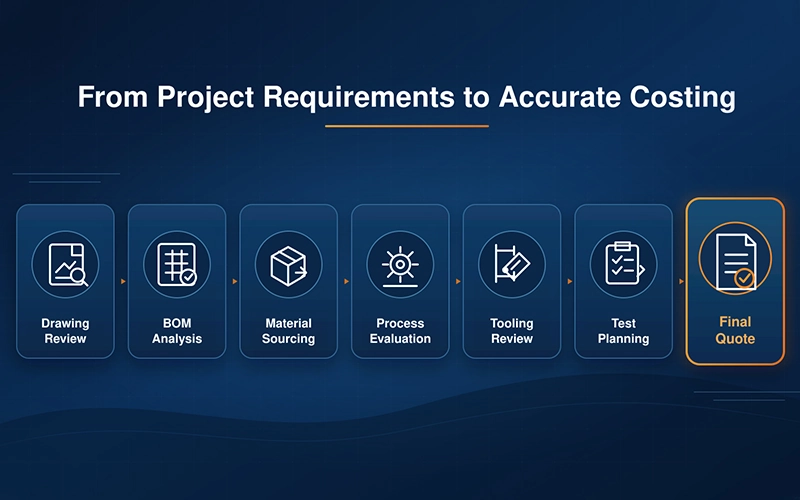
FPIC evaluates custom cable assembly projects through a structured engineering and manufacturing review.
1. RFQ Data Review
The team reviews:
- Drawings and samples
- BOM and wire list
- Application requirements
- Connector and terminal specifications
- Electrical conditions
- Mechanical and environmental requirements
- Testing
- Quantity and delivery
2. Technical Clarification
Missing or conflicting requirements are identified before the quotation is finalized.
3. Material and Sourcing Review
The quotation considers:
- Wire and cable
- Connectors
- Terminals
- Seals
- Protection materials
- Approved suppliers
- Lead times
- Minimum order quantities
4. Manufacturing-Process Evaluation
FPIC evaluates whether the assembly requires:
- Automatic cutting and stripping
- Terminal crimping
- Seal installation
- Soldering
- Housing insertion
- Shield termination
- Taping or sleeving
- Molding
- Manual routing
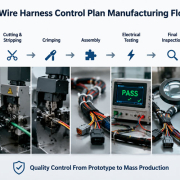
- Electrical testing
FPIC’s documented equipment includes automatic wire cutting and stripping, servo crimping, terminal-processing equipment, integrated cutting and crimping equipment, and cable-harness testers.
5. Tooling and Test Evaluation
The quotation identifies any required:
- Crimp tooling
- Assembly fixtures
- Harness boards
- Test adapters
- Molds
- Inspection gauges
6. Prototype and Production Costing
Prototype and mass-production quotations are calculated separately when the manufacturing conditions differ.
7. Quotation and Development Plan
The final proposal can include:
- Unit price
- Tooling or development cost
- Sample lead time
- Mass-production lead time
- MOQ
- Payment terms
- Quotation validity
- Testing scope
- Commercial assumptions
How Customers Can Receive a Faster Quote
To reduce quotation time, send the following information in the first RFQ email:
- 2D or 3D drawings, wire list, BOM, or sample
- Product application and installation position
- Connector, terminal, and cable part numbers
- Rated voltage, current, signal, and shielding requirements
- Operating temperature and environmental conditions
- Required tests and applicable standards
- Prototype quantity and estimated annual demand
- Required delivery date and destination
Where possible, also identify:
- Approved suppliers
- Acceptable alternative parts
- Critical dimensions
- Special characteristics
- Required reports
- Packaging and labeling rules
This allows the supplier to begin technical and commercial evaluation without repeated clarification.
Questions to Ask When Comparing Quotations
The lowest quoted unit price is not always the lowest total project cost.
Ask each supplier:
- Does the price include all connectors and accessories?
- Are seals, plugs, labels, and protective materials included?
- Is tooling charged separately?
- What testing is included?
- Is 100% electrical testing included?
- Are first-article records included?
- Is the quotation based on the nominated brand?
- Are any alternative materials assumed?
- Does the price include packaging?
- What is the MOQ?
- What is the component lead time?
- Is the price based on prototype or mass-production volume?
- How long is the quotation valid?
- Which Incoterm applies?
A clear comparison prevents hidden differences in material scope, testing, tooling, and delivery terms.
Conclusion
An accurate wire harness quotation is built from complete engineering and manufacturing information.
The most important RFQ inputs include:
- 2D or 3D drawings
- BOM and wire list
- Application and installation position
- Connector and terminal requirements
- Wire and cable specifications
- Voltage, current, signal, and shielding
- Environmental conditions
- Testing and certification requirements
- Prototype and annual quantities
- Tooling requirements
- Delivery and documentation expectations
Cable length remains part of the calculation, but it is only one element.
A reliable quotation should reflect the complete path from material sourcing and wire processing through assembly, inspection, testing, packaging, and delivery.
Providing structured information at the beginning helps both the buyer and manufacturer reduce assumptions, shorten RFQ response time, control development costs, and establish a smoother transition from prototype evaluation to repeat production.
FAQ
What information is required for a wire harness quotation?
The manufacturer typically needs drawings or samples, a BOM or wire list, application details, material specifications, electrical requirements, testing standards, quantities, and delivery expectations.
Can I request a quote without a completed drawing?
Yes. A supplier may evaluate a physical sample, schematic, wire list, or concept description. However, the quotation may remain preliminary until dimensions and materials are confirmed.
Why does annual volume affect the price?
Annual demand determines material purchasing conditions, automation level, tooling investment, production setup, batch size, and labor efficiency.
Why are prototype prices higher than mass-production prices?
Prototypes include engineering review, small-lot purchasing, setup, tooling preparation, inspection, testing, and documentation distributed across a limited quantity.
Does cable length determine the wire harness price?
Cable length affects material usage, but connectors, terminals, processing, assembly complexity, testing, tooling, quality records, and production quantity may have an equal or greater impact.
Should connector part numbers be included?
Yes. Exact part numbers help prevent errors in contact selection, seals, accessories, mating compatibility, wire range, and sourcing cost.
What tests should be stated in the RFQ?
Common requirements include continuity, open-circuit, short-circuit, miswiring, insulation resistance, withstand voltage, pull force, crimp inspection, and functional testing.
What is a budgetary quotation?
A budgetary quotation is an initial estimate based on incomplete information and stated assumptions. It may change after the design, materials, testing, and production requirements are confirmed.
How quickly can FPIC provide a quotation?
Quotation time depends on product complexity and information completeness. Complete drawings, BOM data, part numbers, testing requirements, and quantities allow a faster evaluation.
Get a More Accurate Wire Harness Quote
Send FPIC your drawings, BOM, wire list, samples, connector requirements, electrical specifications, testing standards, prototype quantity, annual demand, and delivery schedule.
Our engineering and manufacturing teams will evaluate the materials, production process, tooling, testing, and batch requirements before preparing the quotation.
Email: info@sz-fpi.com
Resources
- Zuken — Harness Builder 2026 Release
Describes the 2026 additions for estimating and quoting, current BOM pricing and availability, production BOM management, manufacturing documentation, MES connectivity, and tester support. - Zuken — Harness Builder 2026 Features
Explains how the Cost Estimator uses design quantities, part numbers, wire lengths, material data, availability, and labor inputs to support faster quotation preparation. - Zuken — Wire Harness Manufacturing Software
Details automatic BOM generation, cost and time estimation, wire-run reporting, and synchronized manufacturing data. - Zuken — Wire Harness Manufacturing Documentation
Explains how structured design data supports manufacturing drawings, wire lengths, connector tables, wire preparation, assembly, and automated equipment output.