MES Systems in Wire Harness Manufacturing: From Data to Quality Control
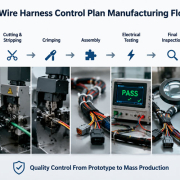
Wire harness manufacturing involves many interconnected processes, including wire cutting, stripping, terminal crimping, connector assembly, testing, inspection, labeling, and packaging. As product complexity and customer quality requirements increase, relying only on paper records or isolated production equipment can make it difficult to maintain consistent process control.
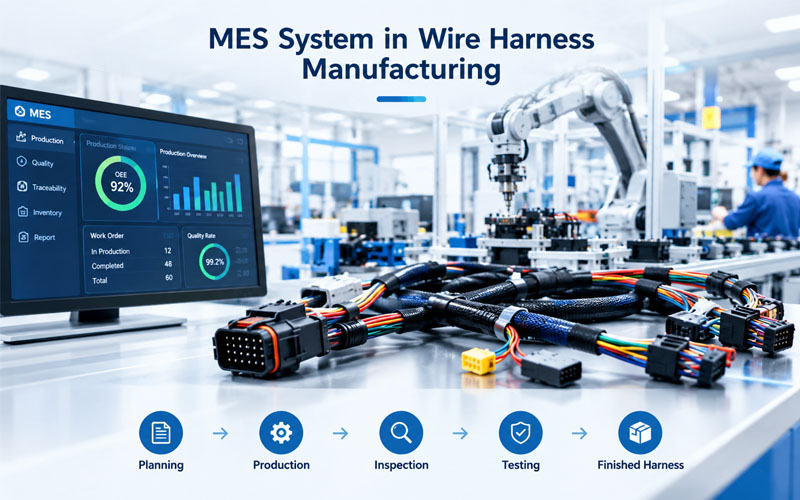
A Manufacturing Execution System (MES) provides a digital layer between production planning and the shop floor. It collects manufacturing data, connects processes, controls production instructions, and creates a traceable record for each production order or assembly.
For wire harness manufacturers, the value of MES is not simply collecting more data. The real objective is to turn production data into better process control and measurable quality improvement.
1.What Is an MES System?
MES stands for Manufacturing Execution System.
An MES manages and monitors manufacturing activities between enterprise-level planning systems and physical production processes. It can connect operators, machines, work instructions, materials, inspection equipment, and production records within one manufacturing workflow.
A typical structure can be viewed as:
ERP / Production Planning
↓
MES
↓
Production Equipment & Operators
↓
Inspection & Testing
↓
Finished Product
In wire harness manufacturing, MES can help manage information such as:
- Work orders
- Product specifications
- Material and component information
- Production routing
- Operator and workstation records
- Process parameters
- Crimping records
- Electrical test results
- Inspection results
- Rework information
- Production timestamps
- Finished-product traceability
The important point is that MES connects these individual records into a controlled production process.
2.Why Wire Harness Manufacturing Benefits From MES
Wire harnesses may appear relatively simple, but production often involves numerous part numbers, wire specifications, terminal types, connector positions, branch configurations, and customer-specific requirements.
A small process error can result in:
- Incorrect wire length
- Wrong terminal selection
- Incorrect crimping
- Terminal position errors
- Missing components
- Incorrect connector assembly
- Wiring sequence mistakes
- Failed electrical tests
Traditional production management can make it difficult to identify exactly when and where an error occurred.
MES helps create a digital relationship between the product, process, material, operator, equipment, and inspection result.
This allows manufacturers to move from:
“We found a defective harness.”
to:
“We can identify the affected production order, process step, material batch, workstation, operator, inspection record, and test result.”
That difference is important for both quality management and root-cause analysis.
3.From Production Data to Process Control
Data collection alone does not improve manufacturing quality.
The value of MES comes from using production data to control manufacturing processes.
For example, an MES workflow may require an operator to scan the production order before starting work. The system can then display the corresponding work instructions, material requirements, process sequence, and inspection requirements.
A simplified workflow is:
Order → Material Verification → Production → Inspection → Electrical Test → Final Inspection → Shipment
At each stage, MES can record whether the required operation has been completed.
This creates a controlled manufacturing route rather than allowing production to depend entirely on manual judgment.
4.Material Traceability at the Beginning of Production
Wire harness quality starts with correct materials.
Depending on the product, a production order may involve:
- Wire
- Terminals
- Connectors
- Seals
- Sleeves
- Tapes
- Clips
- Protective tubing
- Labels
- Overmolding materials
MES can connect material information with the production order.
Barcode or QR-code identification can be used to verify materials before production.
For example:
Production Order → Material Code → Batch/Lot → Workstation → Finished Harness
If an issue is later discovered with a particular material batch, the production history can help identify potentially affected assemblies.
This makes traceability more actionable than simply storing a finished-product serial number.
5.MES and Wire Cutting Processes
Wire cutting is one of the first critical production operations.
Incorrect wire length, wrong wire type, or incorrect cutting configuration can create downstream problems that may not be immediately visible.
An MES-connected production environment can associate cutting operations with the corresponding production order and product specification.
Depending on the equipment and system architecture, production data may include:
- Wire part number
- Cutting length
- Quantity
- Production order
- Machine identification
- Operator
- Production time
- Work order status
This creates a digital record that can be referenced during later inspection or quality analysis.
6.Crimping Process Data Is Critical
Crimping is one of the most important quality processes in wire harness manufacturing.
Crimp quality depends on factors such as:
- Terminal and wire compatibility
- Crimp tooling
- Crimp height
- Crimp width
- Conductor positioning
- Insulation support
- Pull-off strength
- Tool condition
MES can connect crimping operations with production orders and process records.
Where equipment supports digital data collection, crimp force monitoring or other process measurements can also be associated with the relevant production record.
This creates a stronger relationship between:
Crimping Process → Process Data → Inspection → Finished Harness
Instead of checking only the final product, manufacturers can also monitor the manufacturing process that created it.
7.Work Instructions and Error Prevention
Wire harness production often requires operators to work with similar-looking components or multiple product variants.
This creates a risk of:
- Wrong component selection
- Incorrect assembly sequence
- Missing operation
- Incorrect terminal position
- Wrong labeling
MES can provide digital work instructions at the workstation.
Depending on the implementation, operators may see:
- Product drawings
- Assembly instructions
- Component information
- Wiring sequences
- Inspection requirements
- Visual guidance
- Process warnings
The objective is not to replace operator experience.
Instead, digital instructions provide a standardized reference and reduce dependence on memory or paper documents.
8.MES and Electrical Testing
Electrical testing is a critical quality gate for finished wire harnesses.
Typical tests may include:
- Continuity
- Short-circuit detection
- Open-circuit detection
- Resistance
- HiPot
- Insulation resistance
- Functional testing
MES can connect test results with the relevant production order or product identification.
A simplified traceability chain is:
Harness ID → Production Record → Test Program → Test Result → Final Status
This helps prevent situations where a test is performed but the result cannot be reliably connected to the correct finished assembly.
It also provides useful historical data for quality analysis.
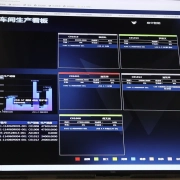
9.Real-Time Production Visibility
One major advantage of MES is improved production visibility.
Instead of waiting for manual reports, production managers can potentially monitor:
- Order status
- Production quantity
- Completed quantity
- Rework quantity
- Inspection status
- Equipment status
- Production progress
- Quality indicators
This can help identify abnormal situations earlier.
For example, if a production order suddenly shows an unusually high rework rate, the team can investigate the relevant process before the issue affects a larger quantity of assemblies.
10.MES Supports Root-Cause Analysis
When a quality problem occurs, the first question is often:
Where did the problem originate?
An MES-supported production environment can provide multiple data points for investigation.
For example:
Finished Harness
↓
Production Order
↓
Workstation
↓
Operator
↓
Material Batch
↓
Process Parameters
↓
Inspection Result
↓
Electrical Test Result
This does not automatically identify the root cause.
However, it gives the quality team a structured evidence base for analysis.
This can significantly reduce the time required to reconstruct production history.
11.MES and Rework Management
Wire harness rework can be particularly sensitive because an assembly may already contain multiple completed operations.
If rework is not properly controlled, there is a risk that:
- The wrong operation is repeated
- Required inspection is skipped
- Reworked products are mixed with qualified products
- Rework history is lost
MES can create controlled rework routes.
For example:
Failed Inspection → Rework Instruction → Rework Completion → Reinspection → Final Release
This helps ensure that a product does not return to normal production flow without completing the required quality checks.
12.MES and WMS Should Work Together
MES focuses primarily on manufacturing execution, while WMS focuses on warehouse and inventory management.
For wire harness manufacturing, connecting these systems can provide a more complete digital workflow.
A simplified structure is:
ERP
↓
MES → Production
↓
Quality / Testing
↓
WMS → Finished Goods
↓
Shipment
For finished harnesses, warehouse operations can include barcode or QR-code scanning, location management, FIFO control, and shipment verification.
Connecting production and warehouse data reduces the gap between manufacturing traceability and logistics traceability.
13.MES Data Should Support Quality Decisions
A common mistake is assuming that more data automatically means better quality.
It does not.
An effective MES implementation should focus on collecting useful and actionable data.
For example:
| Data Type | Quality Value |
|---|---|
| Material batch | Supports material traceability |
| Workstation | Identifies process location |
| Operator | Supports production accountability |
| Crimp data | Helps monitor process consistency |
| Inspection result | Creates quality evidence |
| Electrical test | Confirms product performance |
| Rework record | Supports defect analysis |
| Production timestamp | Helps reconstruct production history |
The goal is to create a manufacturing data chain that supports real decisions.
14.MES Helps Build a Closed-Loop Quality System
The greatest value of MES appears when production data is used for continuous improvement.
A closed-loop model can be represented as:
Production → Inspection → Data → Analysis → Corrective Action → Process Improvement → Production
For example, repeated crimping defects may indicate a tooling, material, parameter, or operator-training issue.
Instead of treating every defective harness as an isolated event, historical production data can reveal recurring patterns.
This moves quality management from reaction toward prevention.
15.MES Implementation Should Start With the Process
MES is not simply a software installation project.
For wire harness manufacturing, implementation should begin by understanding the actual production workflow.
A practical approach is:
Step 1: Map the Production Process
Identify every major manufacturing and inspection step.
Step 2: Define Critical Quality Points
Determine which processes have the greatest impact on product quality.
Step 3: Define Traceability Requirements
Decide what information must be traceable from material through finished product.
Step 4: Connect Equipment and Inspection
Where appropriate, integrate cutting, crimping, testing, and inspection equipment with the MES environment.
Step 5: Standardize Digital Work Instructions
Ensure operators receive the correct information for each product and process.
Step 6: Build Quality Dashboards
Focus on useful indicators such as defect rates, rework, test failures, and production progress.
Step 7: Improve Continuously
Use accumulated production data to identify recurring problems and improve the manufacturing process.
16.MES Is More Than a Digital Production Record
The real value of MES in wire harness manufacturing is the connection between data and action.
A production record tells you what happened.
A well-designed MES system can help answer:
- Why did it happen?
- Where did it happen?
- Which products may be affected?
- Which process needs attention?
- Was the issue detected before shipment?
- What corrective action should be taken?
This is where digital manufacturing becomes a quality management tool rather than simply a data storage system.
For manufacturers producing customized wire harnesses across multiple applications and production volumes, a structured digital manufacturing environment can also improve consistency, production visibility, and customer confidence.
FAQ
What is MES in wire harness manufacturing?
MES, or Manufacturing Execution System, connects production planning with shop-floor manufacturing activities. It can manage production orders, process instructions, material traceability, inspection data, testing records, and production status.
How does MES improve wire harness quality?
MES improves quality by standardizing production processes, controlling work instructions, recording inspection and test results, and providing traceability for materials and manufacturing operations.
Can MES track wire harness test results?
Yes. MES can be integrated with electrical testing equipment so that continuity, HiPot, insulation resistance, and other test results can be associated with the corresponding production order or product identification.
What is the difference between MES and WMS?
MES primarily manages manufacturing execution and production processes. WMS focuses on warehouse and inventory operations. Connecting the two systems can provide traceability from production through finished-goods storage and shipment.
Does MES replace operators in wire harness production?
No. MES supports operators by providing standardized instructions, production information, process controls, and traceability. Skilled operators remain essential for manufacturing and quality decisions.
Is MES suitable for customized wire harness production?
Yes. MES can be particularly useful when production involves many product variants, different customer specifications, multiple workstations, and strict traceability requirements.
Conclusion
MES systems provide a digital connection between production data, manufacturing processes, and quality control.
For wire harness manufacturing, the most valuable applications include material traceability, digital work instructions, process monitoring, crimping records, electrical testing, rework control, production visibility, and root-cause analysis.
The objective is not simply to collect more production data. It is to create a reliable information chain that helps manufacturers prevent errors, control processes, verify quality, and continuously improve production.
When MES is integrated with production equipment, inspection systems, and warehouse management, wire harness manufacturing can move toward a more connected and traceable digital production environment.
Looking for a reliable partner for customized wire harness manufacturing?
FPIC combines wire harness engineering, production process control, inspection, testing, and digital manufacturing management to support customized cable and harness projects.
Contact our engineering team to discuss your wire harness requirements.
Resources
- NIST – Smart Manufacturing Systems: Provides information on smart manufacturing, connected production systems, and data-driven manufacturing technologies.
- MESA International – Manufacturing Operations Management: Provides industry resources related to MES and manufacturing operations management.
- GS1 – Traceability Standards: Explains standardized approaches to product and supply-chain traceability.
- IPC/WHMA-A-620 – Cable and Wire Harness Assemblies: Provides industry requirements and acceptance criteria for cable and wire harness assemblies.
- NIST – Manufacturing USA: Provides additional resources on advanced manufacturing and digital manufacturing technologies.