Wire Harness Design Review Checklist for OEM Engineering Teams
A wire harness is often considered the nervous system of a machine.
It connects:
- Power sources
- Controllers
- Sensors
- Motors
- Battery systems
- Electronic modules
A poor harness design can lead to:
- Electrical failures
- Signal interference
- Assembly difficulties
- Increased production costs
- Field reliability issues
For OEM engineering teams, a detailed wire harness design review before production is essential.
A proper design review helps identify potential problems early and ensures the harness meets:
- Application requirements
- Manufacturing standards
- Reliability expectations
- Cost targets
This article provides a practical checklist for reviewing custom wire harness designs before prototype and mass production.
Why Wire Harness Design Review Matters
Many harness problems do not originate during manufacturing.
They often start during the design stage.
Common design issues include:
❌ Incorrect wire sizing
❌ Poor routing strategy
❌ Insufficient protection
❌ Improper connector selection
❌ Difficult assembly process
❌ Lack of service consideration
A design review allows engineering teams and manufacturers to evaluate the complete harness system before production investment.
1.Electrical Design Review Checklist
Electrical performance is the foundation of wire harness reliability.
OEM engineers should review:
Current Carrying Capability
Verify:
✔ Maximum operating current
✔ Peak current conditions
✔ Continuous load requirements
✔ Safety margin
Wire size selection should consider:
- Current capacity
- Cable length
- Temperature rise
- Installation environment
An undersized wire may cause:
- Excessive heating
- Voltage drop
- Reduced service life
Voltage Rating and Insulation
Review:
- Operating voltage
- Insulation material
- Dielectric requirements
- Environmental exposure
For higher voltage systems, consider:
- Creepage distance
- Clearance requirements
- Insulation protection
Signal Integrity
For signal harnesses, evaluate:
- Shielding requirements
- Noise exposure
- Signal interference
- Cable separation
Applications such as:
- Industrial automation
- Robotics
- Automotive electronics
may require additional EMC considerations.
2.Wire Selection Review Checklist
The wire type directly affects harness performance.
Review:
Conductor Selection
Consider:
- Copper type
- Stranding structure
- Flexibility requirements
- Current capacity
Insulation and Jacket Material
Selection depends on:
- Temperature range
- Chemical exposure
- Mechanical stress
- Environmental conditions
Common materials include:
PVC
Advantages:
✔ Cost-effective
✔ General protection
XLPE
Advantages:
✔ Higher temperature resistance
✔ Good electrical properties
Silicone
Advantages:
✔ Excellent flexibility
✔ Extreme temperature performance
3.Connector Selection Review
Connectors are critical interfaces within the harness system.
OEM teams should review:
Electrical Requirements
Check:
- Rated current
- Voltage rating
- Contact resistance
- Number of circuits
Mechanical Requirements
Evaluate:
- Mating cycles
- Locking mechanism
- Vibration resistance
- Retention force
Environmental Requirements
Consider:
- Waterproof requirements
- Dust protection
- Temperature exposure
- Chemical resistance
Applications may require:
- IP67
- IP68
- IP69K protection
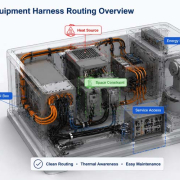
4.Harness Routing and Mechanical Design Review
A good harness design must survive real operating conditions.
Review:
Bend Radius
Ensure:
✔ Cable is not excessively bent
✔ Minimum bend radius is respected
✔ Flex life requirements are considered
Poor routing may cause:
- Conductor fatigue
- Insulation damage
- Connector stress
Mechanical Protection
Evaluate the need for:
- Corrugated tubing
- Sleeves
- Braiding
- Heat shrink
- Protective covers
Protection requirements depend on:
- Abrasion risk
- Temperature
- Movement
- Environment
Strain Relief Design
Check:
- Connector exit protection
- Cable fixing points
- Pull force resistance
Proper strain relief reduces stress on:
- Terminals
- Crimp joints
- Connector housings
5.Thermal Management Review
Heat is one of the main factors affecting harness reliability.
Review:
Temperature Rise
Evaluate:
- Current load
- Ambient temperature
- Bundle size
- Installation space
Heat Sources
Identify nearby:
- Motors
- Batteries
- Power electronics
- Exhaust systems
Solutions may include:
- Higher temperature wire
- Heat shielding
- Improved routing
6.EMC and Shielding Review
Modern equipment contains many electronic systems.
EMC design should consider:
Shielding Requirements
Review:
- Shielded cables
- Grounding method
- Shield termination
Poor shielding can cause:
- Signal errors
- Communication failures
- System instability
Separation Strategy
Separate:
- Power cables
- Signal cables
- Communication cables
Proper routing improves EMC performance.
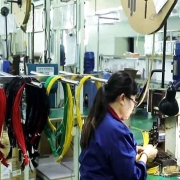
7.Manufacturing and Assembly Review
A harness design must also be production-friendly.
OEM teams should review:
Assembly Feasibility
Check:
✔ Connector accessibility
✔ Wire identification
✔ Assembly sequence
✔ Operator convenience
Crimping Requirements
Review:
- Terminal compatibility
- Crimp specifications
- Pull force requirements
- Tooling requirements
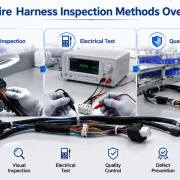
Testing Requirements
Define:
- Continuity testing
- Hi-Pot testing
- Resistance testing
- Functional testing
8.Serviceability Review
A good harness design considers maintenance.
Review:
Accessibility
Can technicians easily:
- Disconnect connectors?
- Replace components?
- Inspect wiring?
Modular Design
Benefits include:
✔ Easier replacement
✔ Reduced maintenance time
✔ Lower service costs
9.Documentation Review Checklist
Before production release, verify:
Required documents:
✔ Wire harness drawing
✔ Bill of materials (BOM)
✔ Connector specifications
✔ Assembly instructions
✔ Testing requirements
✔ Quality standards
Clear documentation reduces production errors.
10.Production Readiness Review
Before mass production, confirm:
Prototype Validation
Including:
- Fit check
- Electrical testing
- Mechanical evaluation
Manufacturing Validation
Review:
- Tooling
- Production process
- Inspection methods
- Quality control plan
Supplier Capability
Evaluate:
- Manufacturing experience
- Testing capability
- Traceability system
- Quality certifications
Wire Harness Design Review Checklist Summary
| Review Area | Key Questions |
|---|---|
| Electrical Design | Is wire sizing suitable for current and voltage requirements? |
| Connector Selection | Can the connector meet electrical and environmental needs? |
| Routing Design | Can the harness withstand movement and vibration? |
| Thermal Design | Are heat sources and temperature limits considered? |
| EMC Design | Is shielding and grounding properly planned? |
| Manufacturing | Can the harness be produced consistently? |
| Testing | Are validation methods clearly defined? |
| Serviceability | Can maintenance be performed efficiently? |
How FPIC Supports OEM Wire Harness Development
FPIC works with OEM customers to optimize wire harness solutions from design review to mass production.
Engineering support includes:
- Wire and connector selection
- Harness structure optimization
- Manufacturing feasibility review
- Crimp process control
- Electrical testing
- Production traceability
With experience in custom cable assemblies and wire harness manufacturing, FPIC helps customers develop reliable and production-ready harness solutions.
Final Thoughts
A successful wire harness begins with a strong design review.
By evaluating:
- Electrical performance
- Mechanical durability
- Thermal conditions
- EMC requirements
- Manufacturing feasibility
OEM engineering teams can reduce development risks and improve long-term reliability.
A well-designed harness is not only easier to manufacture.
It delivers better performance throughout the product lifecycle.
FAQ
What is a wire harness design review?
A wire harness design review is an engineering evaluation process that checks electrical, mechanical, environmental, and manufacturing requirements before production.
Why do OEMs need a harness design checklist?
A checklist helps identify design risks early and prevents costly modifications after tooling and production begin.
What are the most important factors in harness design?
Key factors include wire selection, connector choice, routing, protection, thermal management, EMC, and manufacturability.
When should a wire harness design review happen?
The review should happen during the early design stage and continue before prototype and mass production.
How can manufacturers help with wire harness design?
Experienced harness manufacturers can provide DFM feedback, component recommendations, testing support, and production optimization.
Need Engineering Support for Your Wire Harness Design?
FPIC provides custom wire harness and cable assembly solutions with engineering support from design review to mass production.
Our team helps OEM customers improve reliability, manufacturability, and production efficiency.
Contact FPIC today to discuss your wire harness development project.
Resources
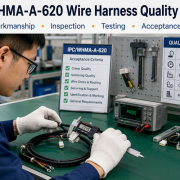
- IPC/WHMA-A-620 – Requirements and Acceptance for Cable and Wire Harness Assemblies
https://www.ipc.org/
Industry standard covering wire harness workmanship and acceptance criteria. - ISO 9001 Quality Management Systems
https://www.iso.org/iso-9001-quality-management.html
Quality management principles supporting consistent manufacturing processes. - IATF 16949 Automotive Quality Management System
https://www.iatfglobaloversight.org/
Automotive quality management requirements for process control. - WHMA – Wire Harness Manufacturer’s Association
https://www.whma.org/
Industry resources for wire harness manufacturing practices.