Custom Wire Harnesses for Industrial Automation
Custom wire harnesses are critical for industrial automation because automated equipment requires reliable power, signal, data, and control connections under vibration, motion, heat, dust, moisture, and continuous production conditions. A well-designed harness can reduce installation errors, improve maintenance efficiency, support compact equipment layouts, and help OEMs achieve stable long-term performance.
As automation, robotics, and electrified equipment continue to expand, the demand for engineered wiring systems is also growing. Transparency Market Research estimates that the global wire harness market will grow from US$101.1 billion in 2025 to US$173.9 billion by 2036, with growth driven by vehicle electrification, industrial automation, and robotics demand. The industrial automation cable market is also projected to increase from US$11.25 billion in 2026 to US$20.12 billion by 2035, at a CAGR of about 6.7%.
For procurement teams and engineers, the key question is not only whether a supplier can assemble cables, but whether the supplier can support design review, material selection, process control, testing, and scalable production.
Why Industrial Automation Equipment Needs Customized Wiring
Industrial automation systems are not simple electrical devices. They often include sensors, motors, servo drives, PLCs, robotic arms, machine vision systems, control cabinets, and HMI interfaces. Each part may require different voltage levels, signal types, connector interfaces, shielding methods, and installation routes.
A standard cable may work in simple applications, but automation equipment usually needs a more precise solution. An industrial equipment wire harness must match the equipment’s mechanical structure, electrical performance, installation space, service cycle, and operating environment.
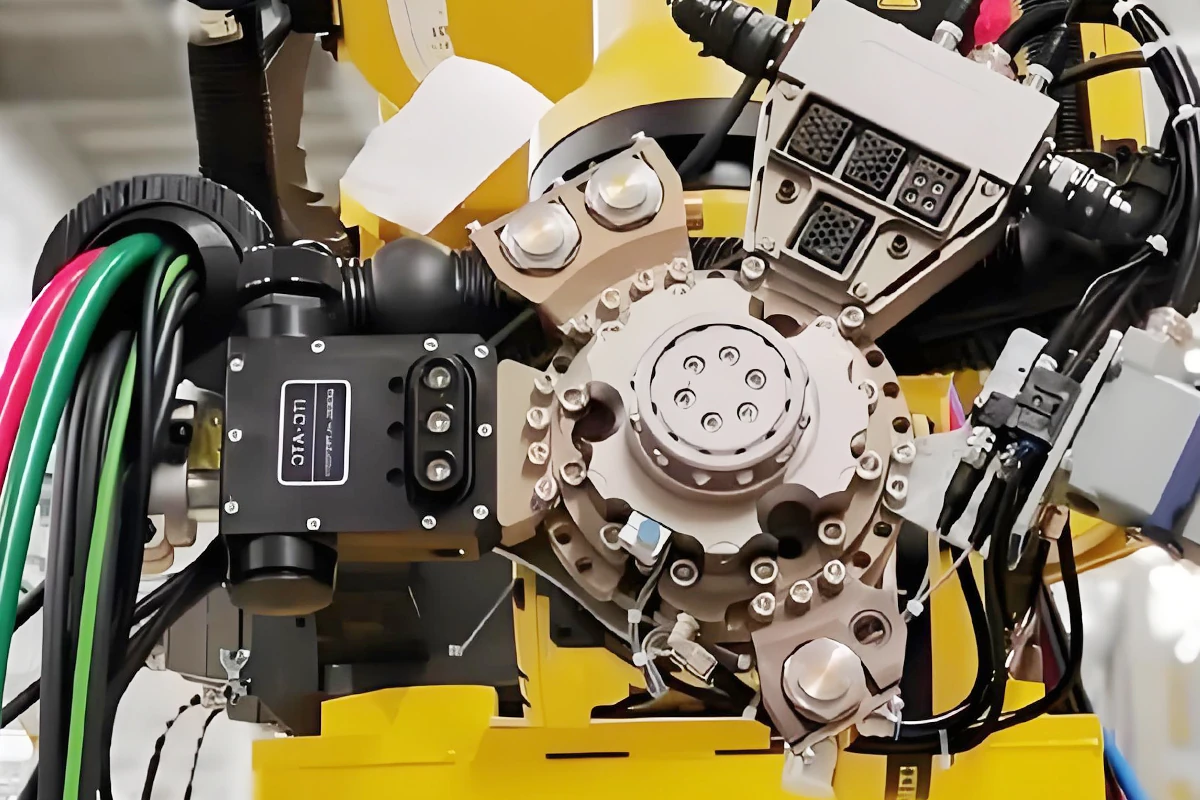
For example, a machine tool may require vibration-resistant connectors and oil-resistant cables. A robotic system may require flexible wires, repeated bending performance, and stable signal transmission. A control cabinet may need clear labeling, organized routing, and easy maintenance. A production line may require fast installation and plug-and-play replacement to reduce downtime.
This is why OEMs increasingly prefer engineered automation equipment wiring solutions instead of loose wires or generic cable assemblies.
Key Design Factors Engineers Should Evaluate
1. Electrical Load and Signal Requirements
Before designing a harness, engineers should define voltage, current, signal type, grounding, shielding, and safety requirements. Power lines, control signals, communication cables, and sensor wires should be planned separately to reduce interference and improve system stability.
For motion control and servo applications, signal accuracy is especially important. Poor shielding, unstable contact resistance, or incorrect grounding may lead to communication errors, equipment alarms, or unexpected downtime.
2. Mechanical Routing and Installation Space
Automation equipment is often compact. Harnesses may need to pass through moving arms, drag chains, cabinets, rotating structures, or tight installation spaces. The routing design should consider bend radius, fixing points, strain relief, connector orientation, and service accessibility.
A good harness layout helps avoid excessive tension, wire abrasion, and connector damage. It also makes assembly and maintenance easier for the final equipment manufacturer.
3. Cable Jacket and Material Selection
Material selection directly affects product life. For industrial applications, engineers may need to consider PVC, PUR, TPE, silicone, or other jacket materials depending on flexibility, oil resistance, abrasion resistance, temperature range, and environmental exposure.
For harsh factory environments, industrial connectors and cables may require features such as IP67 waterproof protection, strong vibration resistance, 360-degree shielding, and temperature resistance from -40°C to 105°C, depending on the equipment requirements. FPIC’s industrial connector and cable materials highlight these performance needs for demanding applications.
4. Connector Selection and Interface Compatibility
Connector selection is not only about matching pins. Engineers should evaluate locking method, mating cycles, current rating, contact resistance, waterproof level, installation direction, and compatibility with existing modules.
In automation equipment, common interfaces may include M-series circular connectors, servo connectors, DB/HDB/DSUB interfaces, MIL-style connectors, terminal blocks, RJ45, and customized board-side or wire-side connections. FPIC’s servo cable assembly catalog shows multiple customized configurations, including SCSI, IEEE 1394, MIL, DB/HDB/DSUB, M-series, housings, and terminals.
5. Labeling, Assembly Logic, and Maintenance
Industrial equipment may include hundreds of wire connections. Clear labeling, color coding, terminal identification, and harness branch design can reduce installation mistakes and shorten maintenance time.
For OEM production, this is especially important. A well-planned custom cable assembly can help operators install faster, reduce rework, and improve equipment consistency across production batches.
What Procurement Teams Should Check When Choosing a Supplier
A reliable wire harness manufacturer should not only ask for price and quantity. The supplier should be able to review drawings, application scenarios, electrical requirements, connector specifications, cable materials, wire routing, testing requirements, and special installation constraints.
FPIC has engineering support for product design and tooling development, including PROE and AutoCAD, as well as process validation tools such as APQP, PPAP, FMEA, SPC, and MSA. The company also has production and tooling engineers with more than 10 years of professional experience.
For automation equipment wiring solutions, process consistency is essential. Cutting, stripping, crimping, soldering, terminal insertion, labeling, taping, inspection, and electrical testing should be controlled by clear work instructions and production standards.
FPIC’s production resources include tooling machining, stamping, plastic injection, CNC, auto assembly with CCD, wire harness workshop, and dust-free workshop capabilities. Its wiring harness catalog also shows automatic wire cutting and terminal crimping, full-automatic double-end housing insertion, automatic glue dispensing, appearance inspection, product alignment checks, and product electrical testing.
Industrial automation equipment usually runs continuously. Small wiring problems can cause expensive downtime. Therefore, testing should include continuity, short circuit, insulation resistance, withstand voltage, terminal pull force, appearance, dimension, and functional verification.
For demanding applications, additional tests may include temperature cycling, humidity, salt spray, vibration, bending, insertion and extraction force, and material compliance checks. FPIC’s quality assurance system includes electrical, environmental, mechanical, and dimensional testing instruments, supporting product verification across different performance requirements.
Certifications do not replace engineering capability, but they help demonstrate that the supplier has a structured quality system. FPIC is certified to ISO 9001, ISO 14001, ISO 45001, IATF 16949, and ISO 13485, and also holds UL and TUV certifications. For global OEMs, this helps reduce supplier qualification risk and supports long-term cooperation.
How FPIC Supports Industrial Automation Wiring Projects
FPIC provides customized wiring harness and cable assembly services for industrial equipment, automation systems, medical devices, energy storage systems, and other electrical applications. The company has more than 20 years of experience in connectors and cable assemblies, with markets covering automotive, new energy, industrial automation, and medical devices.
For industrial automation customers, FPIC can support projects from requirement review to sample development and mass production. Typical support includes:
Design review: checking cable routing, connector matching, electrical requirements, and installation constraints.
Material selection: selecting cable jacket, conductor size, shielding, terminals, connectors, tubing, labels, and protection parts.
Prototype support: producing samples for equipment validation and functional testing.
Process development: defining cutting, stripping, crimping, soldering, assembly, labeling, and inspection steps.
Quality verification: conducting electrical, mechanical, environmental, and dimensional tests based on application requirements.
Mass production: supporting stable production, traceability, and consistent delivery.
FPIC’s slogan, “Empowering Every Encounter—Fast, Flexible and Focused,” reflects the company’s approach to customized projects: fast response, flexible engineering support, and focused execution.
Applications of Custom Harnesses in Industrial Automation
Customized wiring systems are widely used in:
- Industrial robots and robotic arms
- Servo motor and encoder systems
- Machine tools and CNC equipment
- PLC control cabinets
- Automated production lines
- Vision inspection systems
- Sensor and actuator networks
- Packaging machinery
- Semiconductor equipment
- Test and measurement equipment
- Industrial communication modules
- Energy management and power distribution units
Each application has different wiring requirements. For example, servo systems may focus on shielding and motion performance, while control cabinets may focus on organization, labeling, and serviceability. Robotic equipment may require repeated bending performance, while outdoor industrial systems may require waterproof protection.
A Practical Checklist for Buyers and Engineers
Before sending an RFQ, prepare the following information:
| Information Needed | Why It Matters |
| 2D drawings, 3D files, or samples | Helps confirm structure, routing, and connector position |
| Application and installation environment | Defines material, protection, and testing requirements |
| Voltage and current rating | Ensures safe conductor and terminal selection |
| Signal type and shielding requirements | Reduces EMI and communication failures |
| Connector brand or equivalent requirement | Ensures mating compatibility |
| Cable length and tolerance | Supports stable installation |
| Labeling and packaging requirements | Improves assembly and maintenance efficiency |
| Prototype quantity and annual demand | Helps plan sample and mass production |
| Required tests and standards | Ensures final product reliability |
Clear technical information allows the supplier to provide a faster and more accurate quotation.
Why the Right Supplier Matters
In industrial automation, wiring failures do not only affect one component. They may stop a machine, delay production, trigger maintenance costs, or damage customer trust. Choosing the right partner means choosing a supplier who understands design, process, quality, and delivery together.
FPIC supports OEM customers with customized wire harness and cable assembly manufacturing for industrial equipment and related applications. With engineering support, automated production equipment, testing capability, and certified management systems, FPIC helps customers build reliable electrical connections for demanding automation projects.
Conclusion
The growth of industrial automation, robotics, and electrified equipment is creating higher expectations for wiring reliability. OEMs need more than simple cable assembly; they need engineered solutions that match real application conditions.
A well-designed harness can improve safety, reduce installation errors, simplify maintenance, and support long-term equipment performance. For engineers and procurement teams, the right supplier should provide design support, material expertise, controlled production, reliable testing, and scalable delivery.
FPIC is ready to support your next industrial automation project with reliable industrial equipment wire harness, custom cable assembly, and automation equipment wiring solutions.
Looking for a reliable partner for your automation wiring project?
Contact FPIC to discuss your drawings, samples, technical requirements, or prototype needs.
Email: info@sz-fpi.com
Website: https://sz-fpi.com/
FPIC – Empowering Every Encounter—Fast, Flexible and Focused
FAQ
1. Why do industrial automation systems need customized wiring?
Because each machine has different power, signal, routing, space, vibration, and environmental requirements. Customized wiring improves reliability and installation efficiency.
2. What information should I provide for a wire harness quotation?
You should provide drawings, samples, connector specifications, voltage and current ratings, cable length, application environment, quantity, and testing requirements.
3. What tests are important for industrial wire harnesses?
Common tests include continuity, short circuit, insulation resistance, withstand voltage, terminal pull force, appearance inspection, and functional verification.
4. How can a harness reduce equipment downtime?
A properly designed harness improves connection stability, prevents incorrect installation, supports easy maintenance, and reduces failures caused by vibration or wire damage.
5. Can FPIC support prototype and mass production?
Yes. FPIC supports engineering review, sample production, process development, testing, and scalable manufacturing for customized wiring projects.
Resources
Transparency Market Research – Wire Harness Market Outlook 2036
This market report provides global wire harness market size, CAGR forecast, and key growth drivers including electrification, industrial automation, and robotics demand.
Business Research Insights – Industrial Automation Cable Market Report
This report outlines the industrial automation cable market forecast from 2026 to 2035, including estimated market size and CAGR.