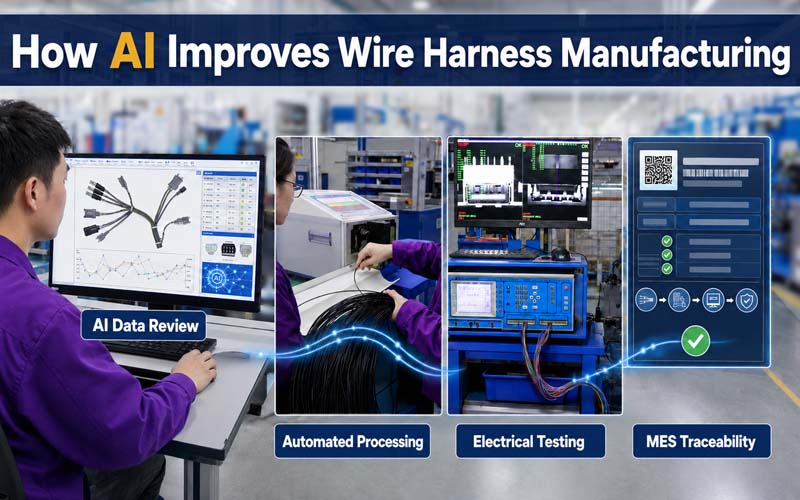
How AI Improves Wire Harness Manufacturing
Artificial intelligence is beginning to influence how wire harness manufacturers review customer data, prepare quotations, manage engineering information, process wires, inspect assemblies, and analyze manufacturing results.
The most practical applications are not autonomous factories that eliminate engineers and operators. Instead, AI is being introduced as an additional decision-support layer around existing engineering and manufacturing systems.
It can help manufacturers:
- Extract information from drawings and wire lists
- Identify missing or conflicting project data
- Structure bills of materials
- Support material and labor estimation
- Analyze production and inspection records
- Detect visual assembly errors
- Prioritize abnormal equipment or quality data
The greatest value appears when AI is connected with controlled engineering data, validated automation, first-article approval, 100% electrical testing, and traceability systems.
For custom cable assemblies, the emerging model is:
Customer Data → AI-Assisted Review → Engineering Approval → Automated Processing → Controlled Assembly → Electrical Testing → MES Traceability
Why AI Is Entering the Wire Harness Industry
Wire harness manufacturing presents an unusual combination of high product variation and detailed manufacturing requirements.
A customer package may include:
- Electrical schematics
- Harness drawings
- BOM tables
- Wire lists
- Connector cavity diagrams
- Component specifications
- Labeling requirements
- Workmanship standards
- Test criteria
- Packaging instructions
The information is not always presented in the same format. Part numbers may appear in drawing notes rather than the BOM, wire lengths may be distributed across different sheets, and some necessary components may be implied rather than listed.
This creates substantial manual work for estimators and engineers.
Cableteque has introduced an AI platform developed specifically for wire harness and cable assembly manufacturers. Its system is designed to read drawings, BOMs, connector tables, wire lists, notes, and part-number callouts, then structure the information for review and quotation.
Cableteque’s 2026 industry analysis also identifies AI-assisted BOM extraction, material sourcing, labor estimation, computer vision, production scheduling, and predictive maintenance as emerging applications within harness manufacturing.
These developments indicate that AI is beginning to move from general manufacturing discussion into harness-specific software and workflows.
Where AI Can Support Wire Harness Engineering
1. Customer Drawing Review
Customer drawings frequently arrive as PDFs, spreadsheets, image files, CAD exports, or packages containing multiple document types.
An AI-assisted system can help locate and classify information such as:
- Wire specifications
- Connector part numbers
- Terminal and seal requirements
- Circuit identification
- From-to connection data
- Cut lengths
- Branch dimensions
- Protective materials
- Drawing notes
- Test requirements
This does not remove the need for engineering review. It allows engineers to spend less time searching through documents and more time evaluating whether the proposed construction is technically and commercially feasible.
2. BOM Extraction and Normalization
Rebuilding a BOM manually can be time-consuming, particularly when customer terminology does not match the manufacturer’s internal part descriptions.
AI tools can help:
- Extract BOM rows from drawings
- Normalize units and descriptions
- Match customer numbers with manufacturer numbers
- Identify duplicate items
- Flag incomplete component information
- Compare BOM data with connector and wire tables
Cableteque describes its platform as capable of extracting information from multiple drawing formats and flagging missing or conflicting details for human confirmation.
3. Design Completeness Checks
AI can assist with exception detection by highlighting potential issues such as:
- Connector without a specified mating component
- Terminal incompatible with the selected wire range
- Missing seals or cavity plugs
- Conflicting wire lengths
- Unspecified shielding termination
- Inconsistent drawing revisions
- Missing test criteria
These checks should be treated as engineering prompts rather than automatic approvals.
A qualified engineer must still confirm connector compatibility, current capacity, insulation requirements, mechanical protection, environmental performance, and manufacturability.
4. Engineering Knowledge Retention
Many custom harness manufacturers depend heavily on experienced engineers and estimators.
Their knowledge may include:
- Which terminal works reliably with a particular conductor
- How long a manual assembly operation normally takes
- Which materials require special processing
- Which drawing details commonly create production problems
- Which customer specifications require additional inspection
AI-supported knowledge systems can help structure this experience so it is not retained only in personal spreadsheets, emails, or individual memory.
AI-Assisted Quoting Is an Early Practical Application
Quoting is one of the earliest areas where harness-specific AI is producing measurable operational value.
Traditional quotation preparation may require an estimator to:
- Review customer drawings.
- Reconstruct the BOM.
- Identify missing parts.
- Search supplier data.
- Determine wire usage.
- Estimate processing operations.
- Calculate labor requirements.
- Include tooling and testing costs.
- Prepare the commercial quotation.
Cableteque states that its AI system can read harness-specific drawing content, source materials against available pricing data, and populate manufacturer-defined labor templates.
The company also reports that AI-supported extraction can reduce repetitive document processing substantially, although results depend on drawing quality, parts-library readiness, integration, and the level of manual exception review required.
For buyers, faster quoting can mean:
- Shorter RFQ response time
- Earlier technical clarification
- Fewer omitted components
- More consistent cost calculations
- Faster prototype decisions
However, AI-generated quotations still require review. Incorrect assumptions made at the quotation stage can later become material shortages, process failures, or unplanned costs.
From AI Review to Approved Engineering Data
AI output should not flow directly into production without human validation.
The engineering release process should verify:
1. Product Requirements
- Application and installation position
- Rated voltage and current
- Signal type
- Operating temperature
- Flexing and vibration requirements
- Ingress-protection requirements
- Chemical or oil exposure
- Regulatory and customer standards
2. Material Compatibility
- Wire and cable specifications
- Connector and terminal combinations
- Seal compatibility
- Shielding construction
- Protective materials
- Temperature ratings
- Flammability and environmental compliance
3. Manufacturing Feasibility
- Cutting and stripping capability
- Terminal crimping method
- Connector insertion process
- Branch-board layout
- Tape, sleeve, or conduit application
- Soldering, welding, or molding requirements
- Inspection accessibility
- Test-fixture requirements
4. Documentation Control
The approved drawing, BOM, wire list, process requirements, and test criteria should be released through a controlled engineering system such as PLM.
Only after approval should the information become available to ERP, MES, production equipment, inspection stations, and testers.
Connecting Engineering Data to Automated Processing
The long-term value of digitalization is not limited to extracting information from drawings.
The larger objective is to transfer approved data into manufacturing without repeatedly re-entering it.
Model-based engineering systems can generate work instructions and processing information for wire cutting, twisted wires, multicore cables, connector preparation, and other production operations.
Industry software has also demonstrated the ability to transmit cutting, stripping, termination, and connector-loading information from engineering environments to compatible wire-processing equipment.
A connected workflow may include:
| Manufacturing Stage | Controlled Data |
| Wire cutting | Wire type, length, quantity, tolerance |
| Stripping | Strip length, blade program, conductor protection |
| Marking | Circuit number, label content, marking position |
| Crimping | Terminal, applicator, crimp height, process program |
| Connector insertion | Housing, cavity number, wire identification |
| Assembly | Branch dimensions, routing, sleeve and tape positions |
| Testing | Connection table, test limits, program revision |
| Traceability | Work order, batch, operator, equipment and results |
This reduces the risk of data being incorrectly copied between separate drawings, spreadsheets, machine programs, and test files.
Automated Cutting and Stripping
Automatic cutting and stripping are among the most mature forms of harness manufacturing automation.
Automatic Wire Cutting
The equipment feeds wire to a programmed length and cuts the required quantity.
Benefits include:
- More consistent wire dimensions
- Faster repetitive processing
- Reduced measuring errors
- Improved production planning
- Better batch consistency
Controlled Insulation Stripping
Automated stripping equipment controls the removal of insulation according to defined parameters.
The process must ensure:
- Correct strip length
- No unacceptable conductor damage
- No excessive exposed conductor
- Stable insulation removal
- Suitable preparation for crimping or soldering
Even when the equipment is automated, variation in insulation material, conductor construction, blade wear, and supplier batches can affect results.
First-off inspection and periodic verification therefore remain necessary.
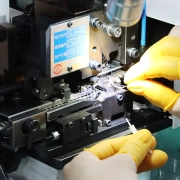
Automated Terminal Crimping
Crimping is a critical process because it creates both the mechanical and electrical connection between the wire and terminal.
Automated crimping may control:
- Terminal feeding
- Wire presentation
- Seal insertion
- Applicator movement
- Crimp cycle
- Finished-wire discharge
- Process monitoring
The key customer benefit is not simply faster production. It is more repeatable terminal positioning and process execution.
However, reliable crimping still depends on:
- Correct wire-terminal compatibility
- Approved applicator
- Defined crimp height
- Maintained tooling
- Correct material
- Stable stripping quality
- Verified pull force
- Appropriate process monitoring
AI may later help analyze crimp-force curves, equipment trends, and defect histories, but it cannot correct an unsuitable terminal-wire combination.
First-Article Confirmation Prevents Repeated Errors
Automation can reproduce correct settings consistently, but it can also reproduce an incorrect setup across an entire batch.
First-article confirmation is therefore required before continuous production.
The initial product should be checked for:
Material Accuracy
- Wire
- Terminal
- Connector
- Seal
- Sleeve
- Tape
- Label
- Accessories
Processing Accuracy
- Cut length
- Strip length
- Crimp height
- Pull force
- Terminal orientation
- Seal position
- Marking information
Assembly Accuracy
- Connector cavity assignment
- Branch dimensions
- Routing direction
- Protective-material position
- Label location
- Shield and ground termination
Electrical Accuracy
- Continuity
- Open circuits
- Short circuits
- Miswiring
- Insulation performance where required
Once approved, the first-article record should be associated with the product revision, work order, materials, tooling, operator, inspector, and test program.
AI can assist in comparing results and identifying anomalies, but formal production release should remain under controlled engineering and quality authority.
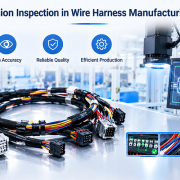
AI and Computer Vision in Harness Inspection
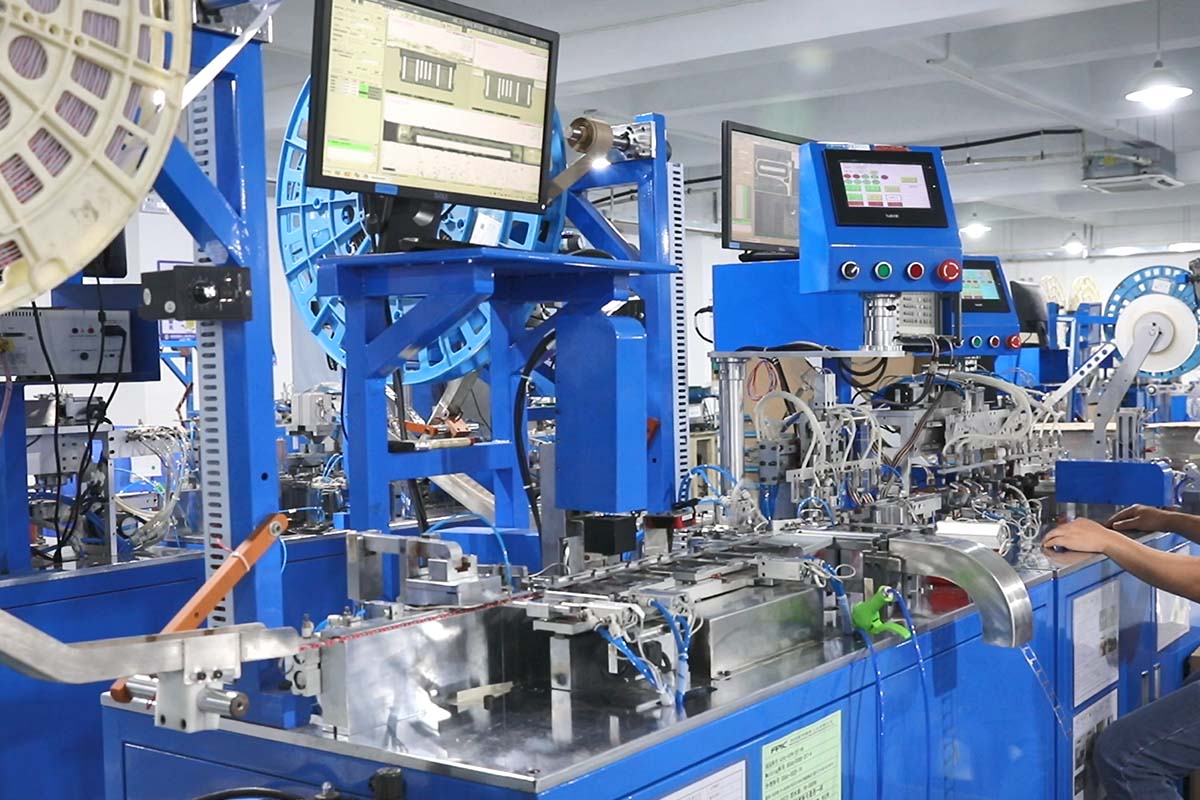
Visual inspection remains important because not every defect can be found through electrical testing.
Possible visual defects include:
- Incorrect wire color
- Missing terminal
- Incomplete connector insertion
- Reversed connector orientation
- Damaged seal
- Improper secondary lock
- Incorrect label
- Missing protective material
- Unacceptable crimp appearance
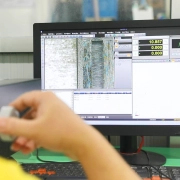
AI-supported computer vision can compare production images against approved references and flag deviations.
Cableteque’s discussion of AI applications identifies computer vision as a potential method for detecting incorrect color sequences, missing terminals, connector problems, and crimp-related defects during assembly.
The main advantage is earlier detection.
A defect found immediately after terminal insertion is less expensive to correct than one discovered after the harness has been routed, taped, overmolded, tested, packaged, or installed.
Computer vision should complement rather than replace:
- Defined inspection standards
- Calibrated dimensional equipment
- Crimp-height measurement
- Pull-force testing
- Cross-section analysis
- Electrical testing
- Qualified inspector
Why 100% Electrical Testing Is Still Essential
AI and automated processing cannot confirm every aspect of the finished electrical circuit.
A wire may be correctly cut, stripped, and crimped but inserted into the wrong connector cavity. A secondary lock may be incomplete, or a conductor may be damaged during later assembly.
Finished products should therefore be tested according to the agreed specification.
Continuity Testing
Confirms that required electrical paths are complete.
Open-Circuit Detection
Identifies missing connections, incomplete terminal insertion, conductor damage, and failed terminations.
Short-Circuit Detection
Finds unintended connections between separate circuits.
Miswiring Detection
Confirms that each wire reaches the correct connector cavity and endpoint.
Insulation Resistance
Verifies electrical isolation where required.
Withstand-Voltage Testing
Evaluates insulation integrity for applicable power or safety-critical assemblies.
Resistance Measurement
May be required for high-current or low-resistance circuits.
The approved wire list or connection table should be linked to the corresponding test-program revision to prevent testing against obsolete engineering data.
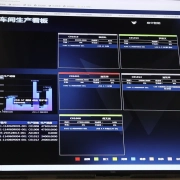
MES Traceability Connects Production and Quality
MES provides the execution-level connection between engineering requirements and actual factory activity.
A traceable production record can include:
- Customer and product number
- Drawing revision
- Work order
- BOM revision
- Material batches
- Machine program
- Applicator or tooling
- Operator
- First-article result
- In-process inspection
- Electrical test result
- Failure and retest history
- Production and approval times
When a tester, inspection station, or processing machine is connected to MES, results can be recorded automatically rather than copied manually into paper forms.
This supports:
- Faster root-cause investigation
- Better engineering-change control
- Batch history retrieval
- Customer documentation
- Process-performance analysis
- Corrective and preventive action
AI can then analyze structured production records to identify patterns that may be difficult to see manually.
How AI Could Use Manufacturing Data
Once reliable data is available, AI-assisted analysis can support several manufacturing activities.
Defect Pattern Analysis
The system may identify relationships between:
- A specific terminal and repeated pull-force failures
- One applicator and changing crimp-force results
- A wire batch and increased stripping defects
- One connector cavity and repeated miswiring
- A shift or workstation and higher rework rates
Predictive Equipment Maintenance
Machine trends may indicate:
- Blade wear
- Applicator wear
- Increasing motor load
- Abnormal cycle time
- Repeated sensor alarms
- Deteriorating process capability
Maintenance can then be scheduled before equipment produces a large quantity of suspect parts or causes unplanned downtime.
Production Scheduling
AI-supported planning may help organize orders according to:
- Material availability
- Machine capability
- Tooling requirements
- Changeover time
- Delivery priority
- Operator qualifications
- Current capacity
Process Optimization
Historical results may help engineers refine:
- Processing windows
- Inspection frequency
- Maintenance intervals
- Production routing
- Tooling selection
- Workstation allocation
These applications depend on clean, structured, and correctly contextualized data. AI cannot produce reliable analysis from incomplete or inconsistent manufacturing records.
PLM, ERP, MES, WMS, and Test Systems
A complete digital manufacturing environment requires several connected systems.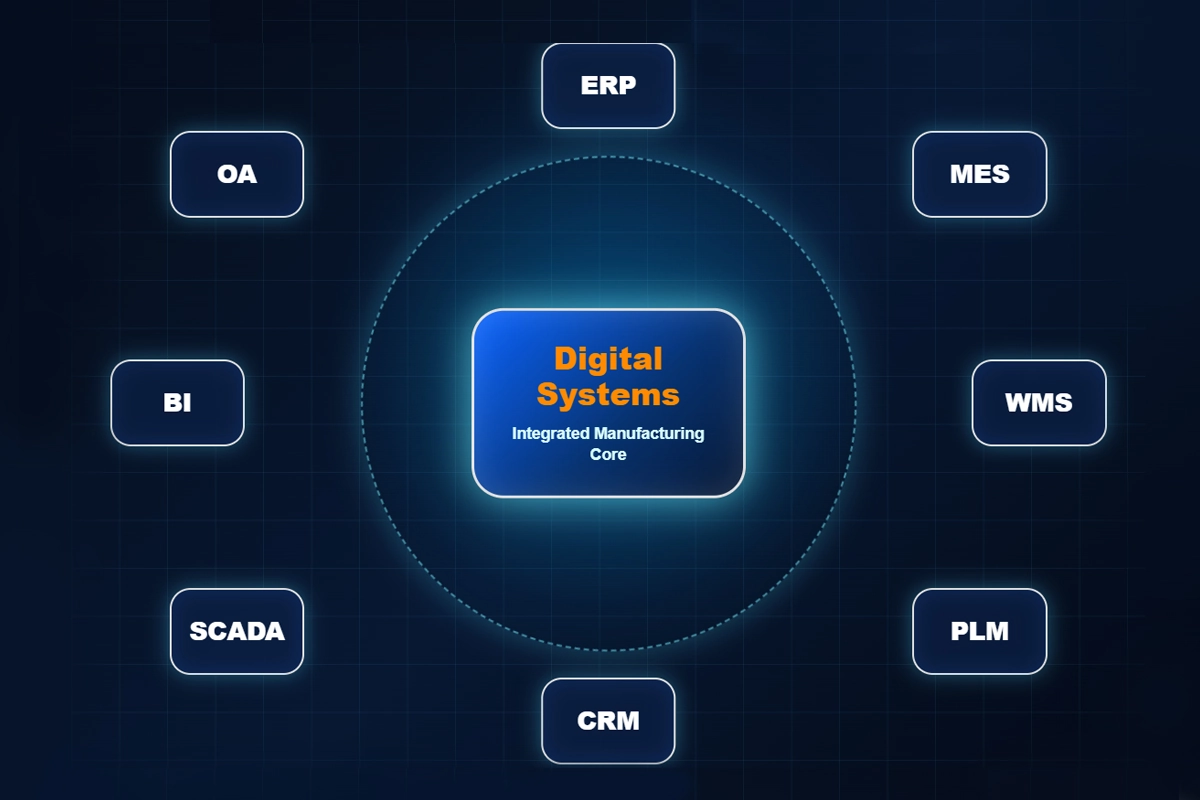
| System | Role in the Manufacturing Workflow |
| PLM | Controls drawings, BOMs, specifications and engineering revisions |
| ERP | Manages quotations, purchasing, orders, planning and costing |
| WMS | Controls inventory location, material lots and warehouse movement |
| MES | Executes production orders and records manufacturing activities |
| QMS | Manages inspection, nonconformance and corrective-action records |
| SCADA | Collects or displays equipment and production data |
| Tester software | Executes electrical test programs and stores results |
| BI and AI tools | Analyze operational, quality and commercial data |
FPIC’s intelligent manufacturing environment includes ERP, MES, WMS, PLM, QMS, SCADA, BI, CRM, and related digital management platforms.
The objective is not to accumulate separate software platforms. It is to maintain a consistent data path from engineering release through production and verification.
What This Digital Model Means for Customers
1. Faster Engineering Review
Structured drawing and BOM data can reduce repetitive preparation and allow engineers to focus on technical risks.
2. Fewer Information-Transfer Errors
Approved data can move from PLM into production instructions, equipment programs, and test requirements with less manual re-entry.
3. More Consistent Wire Processing
Automated cutting, stripping, and crimping support repeatable dimensions and termination processes.
4. Earlier Defect Detection
First-article approval, in-process controls, and visual inspection identify problems before full-batch completion.
5. Reliable Electrical Verification
Testing confirms the completed circuit rather than assuming that upstream processes were error-free.
6. Stronger Traceability
Production, inspection, and test records provide objective evidence for each order or batch.
7. Scalable Batch Production
Automated processing and digital production management help support predictable capacity and delivery.
AI Does Not Replace Engineering Responsibility
AI can locate information, classify data, compare records, and highlight potential problems. It should not independently approve a harness design or release it for production.
Engineering judgment remains necessary for:
- Conductor sizing
- Current and voltage requirements
- Connector and terminal compatibility
- Temperature rise
- Insulation coordination
- Shielding and grounding
- Dynamic flexing
- Bend radius
- Vibration resistance
- Chemical exposure
- Ingress protection
- Crimp validation
- Test-method selection
- Application safety
AI output should therefore be treated as a review aid.
The responsible process is:
AI Suggests → Engineer Reviews → Quality Verifies → Authorized Data Is Released
Challenges of AI Implementation
1. Incomplete Customer Data
AI cannot reliably resolve specifications that are genuinely missing or technically ambiguous.
2. Inconsistent Part Descriptions
Different customers may use different abbreviations and internal numbers for equivalent components.
3. Weak Parts Libraries
Automated matching depends on accurate and maintained internal component records.
4. Disconnected Systems
AI extraction creates limited value when the resulting data must still be manually copied into ERP, PLM, MES, and test software.
5. Revision Control
The system must distinguish current engineering data from obsolete drawings and quotation versions.
6. Data Security
Customer drawings may contain proprietary product, automotive, medical, industrial, or regulated-program information.
7. False Confidence
A professionally formatted AI result may still contain incorrect assumptions. Human review remains essential.
The Future: A Closed Digital Manufacturing Loop
The future of harness production is likely to combine:
- AI-assisted drawing review
- Automated BOM extraction
- Engineering-rule checking
- PLM-controlled revisions
- Digital work instructions
- Automated cutting and stripping
- Monitored terminal crimping
- Vision-supported inspection
- Connected electrical testers
- MES traceability
- AI-assisted quality analysis
The workflow will increasingly operate as a feedback loop:
Customer Requirements → Engineering Data → Production Execution → Inspection and Testing → Quality Analysis → Engineering Improvement
This is more valuable than isolated automation.
A factory may own advanced machines but still experience errors when engineering data, machine programs, inspections, and test records remain disconnected.
The competitive advantage comes from connecting the complete process.
Conclusion
AI is beginning to change wire harness manufacturing at the information and decision-support level.
Harness-specific tools can now assist with drawing interpretation, BOM extraction, sourcing, labor estimation, inspection, and production-data analysis. At the same time, automated cutting, stripping, crimping, connector assembly, and electrical testing continue to reduce repetitive manual operations and improve process consistency.
The most reliable manufacturing model combines:
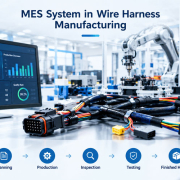
AI-Assisted Review → Engineering Approval → PLM Data Control → Automated Processing → First-Article Confirmation → 100% Testing → MES Traceability
For FPIC customers, this integrated approach supports faster project evaluation, controlled engineering changes, more consistent manufacturing, reliable testing, scalable production, and stronger quality evidence.
AI is not replacing experienced harness engineers. It is giving engineering and manufacturing teams more effective tools for moving accurate product data from customer requirements into verified mass production.
FAQ
1. How is AI used in wire harness manufacturing?
AI can extract BOM and wire-list information, review drawings, identify missing data, support quoting, analyze inspection images, detect production patterns, and assist with equipment maintenance and scheduling.
2. Can AI design a complete wire harness automatically?
AI can assist with data review and design checks, but qualified engineers must approve conductor sizing, connector selection, routing, protection, test requirements, and manufacturing feasibility.
3. What is AI-powered BOM extraction?
It is the use of specialized software to identify and structure component information from drawings, tables, notes, and other customer documents without manually recreating every entry.
4. How does automation improve harness production?
Automated cutting, stripping, and crimping reduce repetitive manual work and help maintain more consistent processing dimensions and terminal conditions.
5. Why is first-article confirmation still required?
Automation can repeat an incorrect setup. The first article verifies materials, programs, tooling, dimensions, assembly, and testing before the full batch proceeds.
6. Can AI replace 100% electrical testing?
No. Electrical testing verifies the physical circuit in each completed product. AI may analyze the records, but it cannot replace continuity, short-circuit, miswiring, insulation, or withstand-voltage testing.
7. What is the role of MES in wire harness production?
MES controls production execution and records work orders, operations, materials, inspections, test results, failures, and production status.
8. What data is required before an AI system can provide reliable results?
Accurate drawings, structured parts libraries, controlled revisions, validated process data, consistent terminology, and reliable manufacturing records are essential.
9. Does AI eliminate the need for experienced workers?
No. It reduces repetitive information processing and supports decision-making, while engineers, technicians, operators, and inspectors remain responsible for technical judgment and production control.
Connect Your Engineering Data to Reliable Production
FPIC supports customized wire harness projects from drawing and BOM review through automated wire processing, first-article confirmation, controlled production, 100% electrical testing, and batch traceability.
Send your drawings, wire list, BOM, connector requirements, samples, test specifications, and expected production volume for engineering evaluation.
Email: info@sz-fpi.com
Resources
- Cableteque — AI-Powered Wire Harness Software
Describes harness-specific drawing intelligence, BOM extraction, missing-data review, sourcing, and labor-estimation capabilities. - Cableteque — How AI Is Used in Wire Harness Production in 2026
Reviews AI applications in quoting, computer vision, scheduling, predictive maintenance, and production operations. - Cableteque — Automated BOM Creation for Wire Harness Manufacturing
Explains the role of data quality, parts libraries, product variants, integration, and engineering-change control in AI-supported BOM workflows. - Wiring Harness News — Model-Based Engineering for Wire Harness Manufacturing
Explains how structured engineering models can generate manufacturing instructions and feed production data into wire-processing machinery. - Wiring Harness News — Harness Builder Design-to-Manufacturing Automation
Discusses transferring cutting, stripping, termination, and connector-processing data from design software to compatible equipment.