Wire Harness DFMEA for Custom Projects: How OEMs Reduce Failure Risk Early
In custom wire harness development, many failures do not originate from manufacturing defects. Instead, they are often rooted in early-stage design decisions that were never fully validated under real conditions. This is why leading OEMs rely heavily on DFMEA (Design Failure Mode and Effects Analysis) to identify risks before they become costly problems.
For complex applications such as industrial equipment, robotics, and energy systems, wire harness DFMEA is not just a documentation exercise. It is a structured engineering process that improves reliability, shortens development cycles, and reduces long-term field failures.
This article explains how DFMEA is applied to custom wire harness projects and how it helps OEMs reduce failure risk early.
What Is DFMEA in Wire Harness Design
DFMEA is a systematic method used to identify potential failure modes in a product design, evaluate their effects, and prioritize actions to reduce risk. In the context of wire harness design, DFMEA focuses on how electrical, mechanical, environmental, and installation factors may lead to failure over time.
Unlike general quality checks, DFMEA is proactive. It is performed during the design phase, often before prototypes are fully validated. The goal is to anticipate problems rather than react to them.
Typical failure categories in wire harness DFMEA include:
- electrical failures such as open circuits or short circuits
- mechanical failures such as conductor breakage or terminal pull-out
- environmental failures caused by heat, moisture, or contamination
- installation-related failures such as incorrect routing or connector mismatch
Why DFMEA Matters in Custom Harness Projects
Custom wire harnesses are inherently more complex than standard products. Each project may involve unique routing paths, connector combinations, current loads, environmental exposure, and installation constraints.
Without DFMEA, many risks remain hidden until late-stage testing or even field use. At that point, the cost of correction is significantly higher.
OEMs use DFMEA to:
- identify weak points in routing, bending, and strain areas
- evaluate connector selection and compatibility
- verify insulation strategy under real operating conditions
- reduce variation during assembly and installation
- improve consistency between prototype and mass production
In practice, DFMEA allows teams to solve problems when they are still inexpensive to fix.
Key Failure Modes in Wire Harness DFMEA
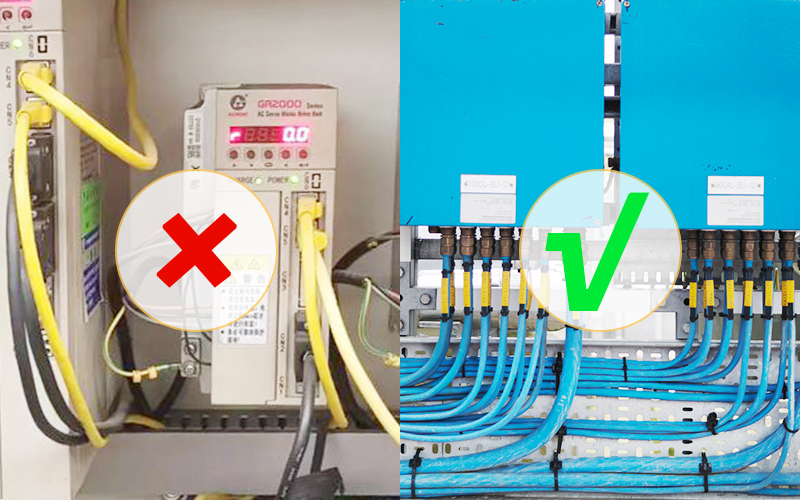
Routing-Related Failures
Routing is one of the most common sources of harness failure. Poor routing can lead to abrasion, excessive bending, thermal exposure, or interference with moving parts.
Typical risks include:
- harness rubbing against sharp edges
- insufficient bend radius near connectors
- routing near heat-generating components
- unstable fixing points leading to vibration damage
DFMEA helps engineers evaluate these risks early and define protective measures such as clamps, sleeves, and rerouting strategies.
Connector and Interface Failures
Connectors are critical points in any wire harness system. Even when connectors meet specification requirements, improper integration can lead to failure.
Common failure modes include:
- incomplete mating or misalignment
- insufficient locking or retention force
- incorrect connector selection for current or voltage
- sealing failure in harsh environments
DFMEA ensures that connector performance is evaluated not only at the component level but also within the actual system environment.
Electrical and Insulation Failures
Electrical reliability is directly linked to insulation quality and spacing control. In high-voltage or high-current systems, small design gaps can lead to major failures.
Typical DFMEA concerns include:
- insulation degradation over time
- insufficient creepage and clearance
- risk of short circuit due to contamination or moisture
- overheating due to undersized conductors
By addressing these risks early, OEMs can improve long-term electrical safety and compliance.
Assembly and Serviceability Failures
A design that works in theory may still fail during assembly or maintenance. DFMEA considers how real operators interact with the harness.
Potential risks include:
- incorrect installation due to unclear routing
- connector misconnection
- difficult access for inspection or replacement
- damage during assembly handling
Designing for serviceability reduces human error and improves field reliability.
How OEMs Apply DFMEA in Practice
Effective DFMEA is not done in isolation. It requires cross-functional collaboration between design, manufacturing, quality, and sometimes field service teams.
A typical DFMEA workflow includes:
- defining system functions and requirements
- identifying potential failure modes
- evaluating severity, occurrence, and detection
- calculating risk priority levels
- implementing corrective design actions
- updating DFMEA based on validation results
The most successful OEMs integrate DFMEA into early design reviews rather than treating it as a final checklist.
How DFMEA Improves Custom Harness Development
When applied correctly, DFMEA provides measurable benefits:
- reduced design iterations
- fewer prototype failures
- improved validation efficiency
- lower warranty and service costs
- faster transition to mass production
It also improves communication between engineering teams by creating a shared understanding of design risks and mitigation strategies.
How FPIC Supports DFMEA-Driven Harness Development
In custom projects, DFMEA is most effective when supported by practical manufacturing and application knowledge. Wire harness design decisions must align with real production conditions, not only theoretical models.
FPIC supports OEMs and system integrators by combining design review, application experience, and manufacturing capability. This includes evaluating routing feasibility, connector integration, protection methods, and production consistency during early development stages.
By aligning DFMEA analysis with real-world harness production, project teams can reduce uncertainty and improve reliability from prototype to mass production.
Final Thoughts
Wire harness DFMEA is one of the most effective tools for reducing failure risk in custom projects. It shifts problem-solving from reactive troubleshooting to proactive design improvement.
For OEMs working with complex systems, the value of DFMEA is not only in preventing failures, but in building a more predictable, scalable, and reliable development process.
The earlier DFMEA is applied, the greater its impact on cost, quality, and long-term performance.
FAQ
What is DFMEA in wire harness design?
DFMEA is a structured method used to identify potential failure modes in a harness design, evaluate their impact, and reduce risk before production.
Why is DFMEA important for custom cable assemblies?
Because custom harnesses involve unique routing, connectors, and environments, DFMEA helps identify risks that standard validation may miss.
What are the most common wire harness failure modes?
Common issues include routing damage, connector failure, insulation breakdown, and installation errors.
When should DFMEA be performed?
DFMEA should be performed early in the design phase and updated throughout development and validation.
Can DFMEA reduce warranty and field failure costs?
Yes. By addressing risks early, DFMEA reduces the likelihood of failures in production and real-world use.
Need Support for a DFMEA-Based Harness Project?
If you are developing a custom wire harness for industrial, automotive, or energy applications, early DFMEA and design review can significantly reduce risk and improve product reliability.
FPIC supports custom cable assembly projects with engineering collaboration, prototyping, and scalable manufacturing.
Contact FPIC to discuss your project requirements and drawings.
Resources
- AIAG & VDA FMEA Handbook: provides standardized methodology for DFMEA and PFMEA used across automotive and industrial industries.
- IEC 60812 – Failure Modes and Effects Analysis: international standard describing systematic procedures for failure analysis and risk evaluation.
- SAE J1739 – DFMEA Standard: defines recommended practices for performing DFMEA in automotive and related systems.
- USCAR-2 Performance Specification for Automotive Electrical Connector Systems: outlines validation requirements for connectors, often referenced in harness DFMEA.
- IPC/WHMA-A-620 Cable and Wire Harness Standard: widely used standard for cable assembly workmanship and acceptance criteria.