Spring Equinox: Meaning, Traditions & Culture
Introduction
The Spring Equinox (Chunfen, 春分) is one of China’s 24 Solar Terms, usually occurring around March 20–21 each year. It marks a key moment in the seasonal calendar when day and night are nearly equal in length, symbolizing balance, renewal, and growth.
For international readers, the Spring Equinox is not only an astronomical event but also a cultural milestone that reflects how ancient Chinese society understood and harmonized with nature.
What Does “Chunfen” Mean?
The word Chunfen literally means “the division of spring.” It represents the midpoint of the spring season, when:
- Day and night are of equal length
- Temperatures become mild and stable
- Nature enters a period of rapid growth
This balance between light and darkness has long been seen as a symbol of harmony—both in nature and in human life.
The Astronomical Significance
From a scientific perspective, the Spring Equinox occurs when the sun crosses the celestial equator. On this day:
- The sun shines directly over the Earth’s equator
- Most regions experience equal daylight and nighttime
- Seasonal transition accelerates in both hemispheres
This phenomenon is observed globally, making it a shared natural experience across cultures.
Symbolism of the Spring Equinox
In traditional Chinese philosophy, Chunfen carries rich symbolic meanings:
- ⚖️ Balance and harmony – Equal day and night represent equilibrium
- 🌱 Growth and vitality – Nature is fully awakening
- 🌸 Renewal and opportunity – A time for new beginnings
These ideas align closely with concepts found in Eastern philosophy, particularly the balance of Yin and Yang.
Traditional Customs and Activities
🥚 1. Egg Balancing


One of the most famous Chunfen traditions is balancing eggs. It is believed that the unique gravitational alignment on this day makes it easier to stand an egg upright.
While scientifically debatable, the activity has become a fun cultural practice enjoyed by families and children.
🌿 2. Eating Spring Vegetables
People traditionally consume fresh seasonal greens, sometimes referred to as “spring vegetables,” believed to help cleanse the body and promote health after winter.
🪁 3. Flying Kites
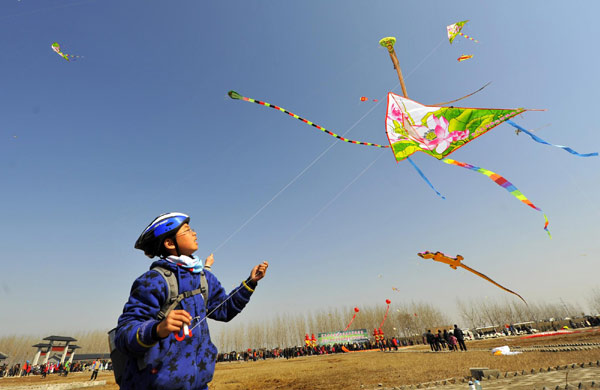


As the weather warms and winds become gentle, flying kites becomes a popular activity. It symbolizes:
- Letting go of worries
- Embracing freedom and hope
- Enjoying outdoor life
🌼 4. Farming Activities
For farmers, Chunfen marks a critical agricultural period:
- Sowing crops
- Irrigating fields
- Managing soil fertility
The Spring Equinox has long served as an essential guide in traditional agricultural planning.
Spring Equinox in Modern Life
Today, Chunfen continues to influence:
- Healthy seasonal diets
- Outdoor activities and wellness
- Cultural education about nature and sustainability
Many schools and communities use the 24 Solar Terms as a way to teach ecological awareness and respect for natural cycles.
Cultural Meaning in a Global Context
For Western audiences, the Spring Equinox is already familiar as a seasonal turning point. However, the Chinese interpretation adds a deeper cultural layer—connecting astronomy, agriculture, philosophy, and daily life.
It reflects a worldview where:
- Humans live in harmony with nature
- Seasonal changes guide behavior
- Balance is essential for long-term well-being
Spring Equinox and FPIC Culture
At FPIC, the concept of balance and steady growth resonates strongly with our company values.
Just as the Spring Equinox represents equilibrium and renewal, we believe in:
- ⚖️ Balanced development between innovation and quality
- 🌱 Sustainable growth through continuous improvement
- 🤝 Team harmony as the foundation of long-term success
With over 23 years of manufacturing experience, we understand that true progress—like nature—requires patience, precision, and consistency.
Conclusion
The Spring Equinox is a powerful reminder of balance, renewal, and growth. As day and night reach perfect equilibrium, it invites us to reflect on harmony in both nature and life.
By understanding Chunfen, international audiences can gain deeper insight into how traditional Chinese culture interprets the rhythms of the natural world—and how those timeless principles remain relevant today.
References
-
UNESCO – The 24 Solar Terms (Intangible Cultural Heritage)
-
Encyclopaedia Britannica – Equinox and seasonal transitions
-
Traditional Chinese agricultural and cultural records
(Content compiled and originally written for cultural and educational purposes.)