
How to Design a Robot Wire Harness for Torsion, Bend Radius and Drag Chain Life
As robotics systems evolve toward higher speed, precision, and continuous operation, the wire harness is no longer a passive component. In dynamic environments such as robotic arms, automated production lines, and gantry systems, harness design directly determines system uptime, maintenance frequency, and long-term reliability.
Unlike static cable assemblies, robot wire harness must withstand repeated torsion, tight bending, and continuous motion cycles inside drag chains or multi-axis structures. A design that ignores these factors may fail prematurely, even if electrical specifications appear correct.
This article focuses on three critical aspects of robotic harness design: torsion resistance, bend radius control, and drag chain life optimization.
Why Robotic Wire Harness Design Is Different
In robotic applications, cables are exposed to constant mechanical stress rather than remaining fixed. Movements such as rotation, extension, retraction, and multi-axis articulation create combined stresses that standard industrial cables are not designed to handle.
Typical challenges include:
- continuous twisting in robotic joints
- repeated bending in confined routing paths
- acceleration and deceleration forces
- friction inside drag chains
- vibration and shock from machine operation
Because of these conditions, robotic harness design must consider mechanical behavior as seriously as electrical performance.
Torsion Design: Managing Continuous Twisting
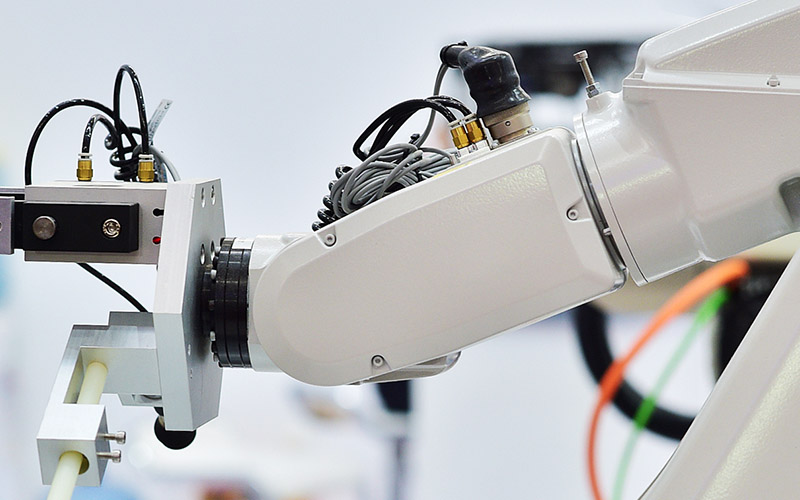
Torsion occurs when cables are twisted along their longitudinal axis, which is common in robotic joints, especially in 6-axis arms and rotating modules.
Use Torsion-Resistant Cable Structures
Not all cables are suitable for torsional applications. Standard cables may experience internal conductor breakage or insulation fatigue after relatively few cycles.
Torsion-resistant cables are typically designed with:
- fine-stranded conductors for flexibility
- optimized lay length to distribute stress
- specialized insulation materials that resist cracking
- reinforced outer jackets for mechanical durability
These design features allow the cable to absorb rotational stress more evenly.
Define Torsion Limits Early
Each cable type has a defined torsion capability, usually expressed in degrees per meter. Exceeding this limit significantly reduces service life.
During design, it is important to:
- calculate maximum rotation angles
- define neutral positioning to minimize stress
- avoid combining torsion with excessive tension
Proper torsion planning ensures predictable performance over millions of cycles.
Bend Radius: The Foundation of Cable Life
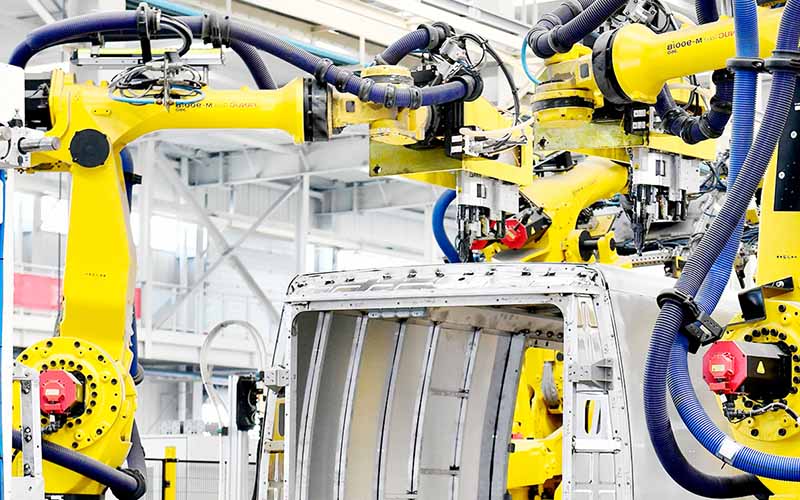
Bend radius is one of the most critical parameters in robotic harness design. A bend radius that is too small will accelerate insulation fatigue, conductor breakage, and shielding failure.
Follow Dynamic Bend Radius Standards
For moving applications, the dynamic bend radius is typically larger than the static bend radius. Ignoring this difference is a common cause of early failure.
A well-designed system should:
- maintain consistent bend radius throughout motion
- avoid sharp transitions near connectors
- prevent flattening or deformation under load
Protect Critical Stress Points
The highest stress usually occurs at:
- connector exits
- clamp positions
- entry and exit points of drag chains
- branch breakouts
These areas require additional strain relief and mechanical protection to prevent localized failure.
Drag Chain Design: Maximizing Cable Life
Drag chains are widely used in automation systems to guide and protect cables during linear motion. However, incorrect harness design inside the chain can quickly lead to wear, entanglement, or failure.
Select the Right Cable for Drag Chain Use
Drag chain cables are specifically designed to handle:
- continuous flexing
- abrasion between cables
- confined movement within chain links
Using standard cables in a drag chain environment often results in premature failure.
Optimize Cable Arrangement
Inside the drag chain, cables should be arranged to minimize friction and stress:
- avoid overfilling the chain (leave space for movement)
- separate cables by function or size when possible
- prevent crossing and twisting inside the chain
- maintain parallel alignment
Proper layout reduces internal wear and improves heat dissipation.
Control Chain Fill Ratio and Support
Overloading the drag chain increases friction and limits cable movement. A typical recommendation is to keep the fill ratio below a safe threshold to allow free motion.
Additionally, long travel distances may require:
- intermediate support
- guided channels
- reinforced mounting points
These measures help maintain consistent performance over long cycles.
Material Selection Matters
Cable materials play a major role in robotic performance. Different jacket and insulation materials offer varying levels of flexibility, wear resistance, and environmental protection.
Common material considerations include:
- PVC for general applications
- PUR for high abrasion resistance
- TPE for extreme flexibility and dynamic motion
Choosing the right material depends on motion type, environment, and expected lifecycle.
Validation for Robotic Harness Performance
A robust robotic harness design must be validated under real operating conditions. Simulation alone is not sufficient.
Typical validation tests include:
- torsion cycle testing
- bend cycle testing
- drag chain lifecycle testing
- temperature and environmental testing
- mechanical stress and retention testing
These tests ensure the harness meets the required lifecycle expectations before deployment.
How FPIC Supports Robotic Cable Assembly Projects
Robotic applications require more than just flexible cables. They require a coordinated design approach that considers motion dynamics, routing constraints, and long-term durability.
FPIC supports custom robotic wire harness and cable assembly development, including:
- high-flex cable selection
- drag chain routing optimization
- connector integration for moving systems
- prototype validation and lifecycle testing
By aligning harness design with real motion conditions, FPIC helps reduce failure risk and improve system reliability.
Final Thoughts
Designing a robot wire harness is fundamentally different from designing a static cable system. Torsion, bend radius, and drag chain behavior must be treated as core design inputs rather than secondary considerations.
Ignoring these factors leads to early failure, increased maintenance, and system downtime. Addressing them early results in longer service life, improved safety, and better overall performance.
A well-designed robotic harness is not just flexible—it is engineered for motion.
FAQ
What is torsion in robotic cables?
Torsion refers to the twisting motion applied to a cable along its axis, common in robotic joints and rotating systems.
Why is bend radius critical in robotics?
A smaller-than-recommended bend radius accelerates material fatigue and significantly reduces cable lifespan.
Can standard cables be used in drag chains?
Standard cables are not designed for continuous flexing and typically fail quickly in drag chain applications.
What affects drag chain cable life most?
Key factors include bend radius, fill ratio, cable material, routing layout, and motion speed.
How can I extend robotic cable lifespan?
Use high-flex cables, maintain proper bend radius, optimize routing, and validate through lifecycle testing.
Need a Reliable Robot Wire Harness Solution?
If your project involves robotic arms, automation systems, or drag chain applications, early harness design is critical to long-term performance.
FPIC provides custom robotic cable assemblies designed for torsion, continuous flexing, and harsh industrial environments.
Contact FPIC today to discuss your application and get engineering support.
Resources
- Igus – Chainflex Cables Overview: explains cable design principles for continuous flexing, torsion resistance, and drag chain applications.
- LAPP – Drag Chain Cable Guide: covers material selection, bend radius, and mechanical stress factors in dynamic cable systems.
- HELUKABEL – Robotic Cable Solutions: provides insight into torsion-resistant cable construction and robotic motion requirements.
- TKD Kabel – Torsion Cables: details cable design for torsional loads and multi-axis robotic applications.
- igus – Energy Chain Design Guidelines: outlines best practices for drag chain design, fill ratio, and cable arrangement.